2030 Prediction: AI Reading Assistants Will Replace Teachers for 60% of Textbook Learning: Here's How Bionic Reading Apps Are Already Preparing Students

Alex Rivera
Productivity Coach
The Reading Revolution Is Already Here, And Most People Haven't Noticed
While everyone's been freaking out about ChatGPT writing essays, something quieter but far more transformative has been happening: AI reading assistants are fundamentally changing how we consume and understand text. Amazon just rolled out AI-powered "Story So Far" recaps on Kindle devices, Google Play Books launched "Catch me up" summaries, and bionic reading apps like FastRead are helping students process textbooks 50% faster than traditional reading methods.
Here's the controversial prediction: by 2030, AI reading assistants will replace traditional teacher-led instruction for at least 60% of textbook learning. Not because teachers aren't valuable, but because the way we've been teaching reading comprehension is painfully inefficient compared to what's now possible.
This isn't science fiction. The technology already exists. Let's break down exactly how this transformation will unfold, and why students who adopt tools like bionic reading apps today will have a massive advantage.
What's in this article
- Prediction #1: Bionic reading becomes standard by 2027
- Prediction #2: AI study buddies replace 40% of tutoring
- Prediction #3: Reading profiles beat reading levels
- Prediction #4: Textbook publishers pivot to interactive reading
- Prediction #5: Speed reading becomes a core skill by 2030
- Prediction #6: AI assistants reshape academic inequality
- Wild card: Brain-computer interfaces by 2035
- Timeline at a glance
- How to prepare today
- The bottom line
Prediction #1: Bionic Reading Becomes Standard in Educational Apps by 2027
The Prediction: Within three years, every major educational platform, from Blackboard to Canvas to Apple Books, will offer bionic reading as a built-in accessibility feature, right alongside dark mode and font size adjustments.
Why It's Inevitable: Bionic reading (bolding the first half of each word to create visual fixation points) has already proven its effectiveness. Students using FastRead's bionic reader report 30-50% faster reading speeds with better comprehension, particularly those with ADHD or dyslexia. For a closer look at what the lab data does and does not support, see our guide to eye tracking research on bionic reading. The technology is dead simple, no complex AI required, just smart text formatting.
Schools are desperate for solutions to the "reading crisis." According to recent literacy assessments, reading comprehension scores have dropped significantly post-pandemic. Bionic reading offers an immediate, measurable improvement without requiring curriculum changes or teacher retraining. That's politically irresistible.
Timeline: Early adopters (progressive school districts, accessibility-focused platforms) will implement by late 2025. Mainstream adoption hits critical mass by 2027 when Apple or Google integrates it system-wide.
What This Means for Students: If you're currently in school, learning to read in bionic format now gives you a 2-3 year head start. Try FastRead's speed test to measure your baseline, then practice with bionic text. By the time everyone else is adapting, you'll already be fluent.
Prediction #2: AI "Study Buddies" Replace 40% of Tutoring by 2028
The Prediction: AI reading assistants will evolve from passive recap tools (like Kindle's new "Ask This Book" feature) into active study partners that quiz you, identify comprehension gaps, and adapt explanations to your learning style.
The Evidence: Amazon's recent rollout of in-book Q&A tools on its e-reader devices, where you can highlight any passage and ask questions about characters, plot, or themes, is just the beginning. Google Play Books launched similar "Book Insights" features in June. These tools currently answer questions. Soon they'll ask them.
Imagine reading a biology textbook in bionic format on FastRead's focus reader, and every few pages, an AI assistant pops up: "You just read about cellular respiration. Can you explain the difference between glycolysis and the Krebs cycle in your own words?" It checks your answer, identifies misconceptions, and offers targeted explanations.
Timeline: Basic question-answering (like Kindle's current features) is here now. Proactive quizzing and adaptive tutoring hits beta by 2026, mainstream by 2028.
The Tutoring Industry Should Be Worried: Why pay $50/hour for human tutoring when an AI can provide unlimited, personalized support for $10/month? The human tutors who survive will focus on motivation, executive function coaching, and complex problem-solving, not basic comprehension.
Prediction #3: "Reading Profiles" Become More Important Than Reading Levels by 2029
The Prediction: Schools will abandon crude reading level assessments ("5th grade reading level") in favor of detailed reading profiles that track speed, comprehension, focus duration, vocabulary gaps, and optimal text formatting preferences.
Why It Matters: We've known for decades that "reading level" is an oversimplification. A student might decode words perfectly but struggle with comprehension. Another might understand complex ideas but read slowly due to ADHD.
Bionic reading apps are already collecting this data. FastRead's reading tracker measures words per minute, session length, and improvement over time. As AI reading assistants become ubiquitous, they'll build comprehensive profiles: "Sarah reads 30% faster with bionic formatting, comprehends dense scientific text best in 15-minute sessions, and needs vocabulary support for academic Latin roots."
Timeline: Early implementations in progressive school districts by 2027. Standardized reading profiles replace traditional assessments by 2029-2030.
For Students: Start building your reading profile now. Use FastRead's practice texts to experiment with different formats. Track what helps you focus. Understanding your optimal reading conditions is a superpower.
Prediction #4: Textbook Publishers Pivot to "Interactive Reading Experiences" by 2028
The Prediction: Traditional static textbooks, even digital PDFs, will be considered obsolete. Publishers will create "living textbooks" that combine bionic formatting, embedded AI assistants, adaptive difficulty, and real-time comprehension checks.
The Business Case: Publishers are terrified of becoming irrelevant. When students can feed any PDF into a free tool like FastRead's bionic reader and get better comprehension than expensive textbooks provide, the traditional model collapses.
Their survival strategy: create textbooks that are AI reading assistants. Imagine a biology textbook that automatically adjusts text density based on your comprehension, offers bionic formatting, summarizes chapters you're struggling with, and connects concepts to your other coursework.
Timeline: Pilot programs from major publishers (Pearson, McGraw-Hill) launch 2026-2027. Mainstream adoption by 2028-2029 as schools demand interactive formats.
Student Impact: The gap between students with access to these premium tools and those without will be enormous, unless free alternatives like FastRead (available on iOS, Android, and web) maintain feature parity.
Prediction #5: Speed Reading Becomes a Core Skill Like Typing by 2030
The Prediction: Schools will teach speed reading techniques (including bionic reading) as a fundamental literacy skill, alongside traditional reading instruction. "Words per minute" will be tracked as rigorously as typing speed.
Why This Shift Happens: The volume of required reading is exploding. College students already report reading 300-500 pages per week across courses. Professional jobs require processing endless reports, emails, and documentation. The people who can read 500 words per minute with strong comprehension will have a massive career advantage over those stuck at 200 wpm.
Bionic reading offers the most accessible entry point. Unlike complex speed reading courses (which cost hundreds of dollars), apps like FastRead are completely free and show immediate results. When schools realize they can boost reading speeds 30-50% with simple text formatting, adoption becomes inevitable.
Timeline: Progressive schools pilot speed reading programs 2026-2027. Mainstream curriculum integration by 2029-2030.
Start Now: Don't wait for schools to catch up. Test your current reading speed, practice with bionic text, and track improvement. Students who develop this skill early will be reading 2-3x more content than peers by graduation.
Prediction #6: AI Reading Assistants Reduce Academic Inequality, But Create New Divides
The Prediction: Free AI reading tools will democratize access to personalized learning support, helping low-income students who can't afford tutors. But a new divide emerges between students who learn to use these tools effectively and those who don't.
The Paradox: Tools like FastRead's text summarizer and vocabulary builder offer capabilities that previously required expensive tutoring. A student in a rural school with no AP courses can now process college-level texts independently.
But, and this is crucial, having access to tools doesn't mean knowing how to use them strategically. Students with educated parents or good mentors will learn to combine bionic reading, AI summaries, and spaced repetition into powerful study systems. Others will use the same tools superficially and wonder why they're not improving.
Timeline: This is already happening. The divide will become obvious by 2027-2028 as early adopters show dramatically better outcomes.
The Solution: Schools must teach "AI reading literacy", not just how to use tools, but how to build effective study systems around them. Students should learn to use bionic reading for active study, AI summaries for review, and comprehension questions for self-testing.
Wild Card Prediction: Brain-Computer Interfaces for Direct Text Transmission by 2035
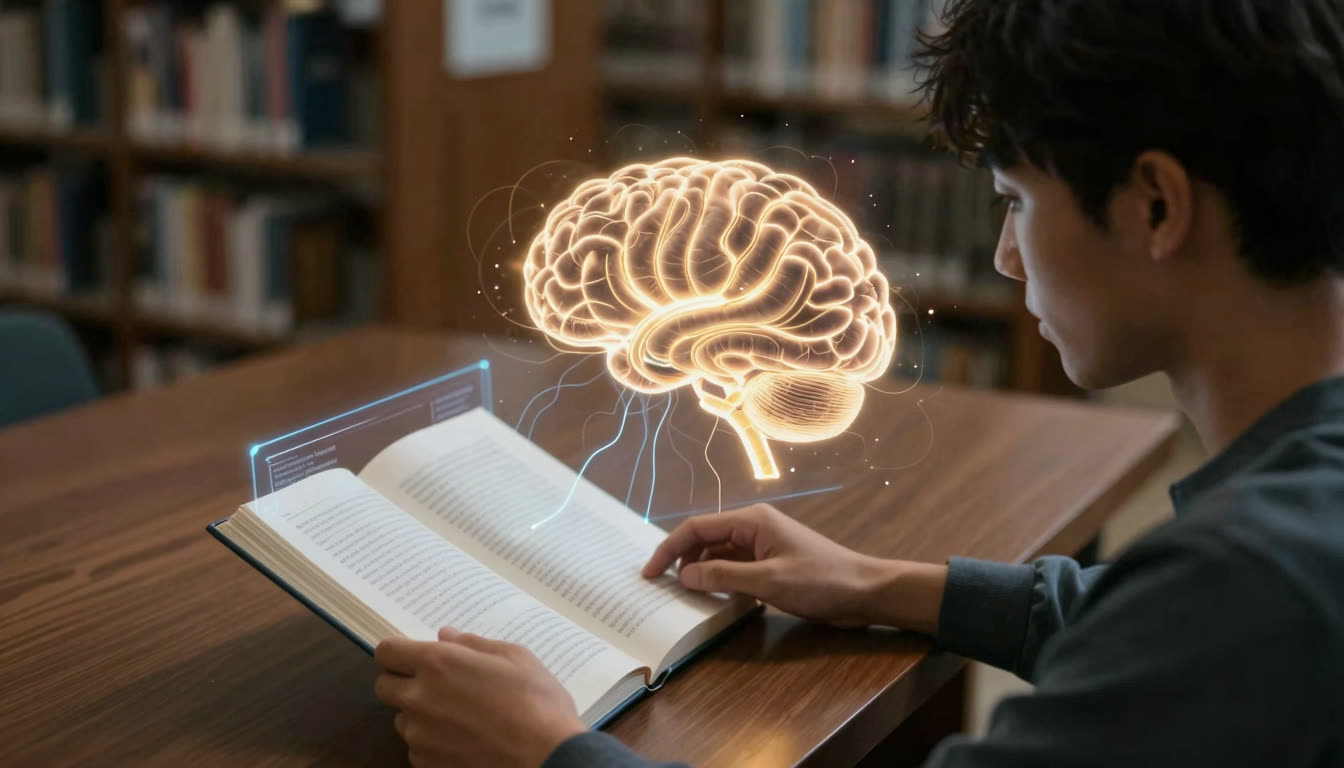
The Wildest Scenario: Forget bionic reading and AI assistants. By the mid-2030s, early adopters are using non-invasive brain-computer interfaces that transmit text information directly to visual processing centers, bypassing the eyes entirely.
Sound insane? Neuralink and competing companies are already testing BCIs. Current applications focus on mobility and communication, but reading is an obvious next target. Why move your eyes across a page at 300 words per minute when you could receive information at 3,000 wpm directly to your visual cortex?
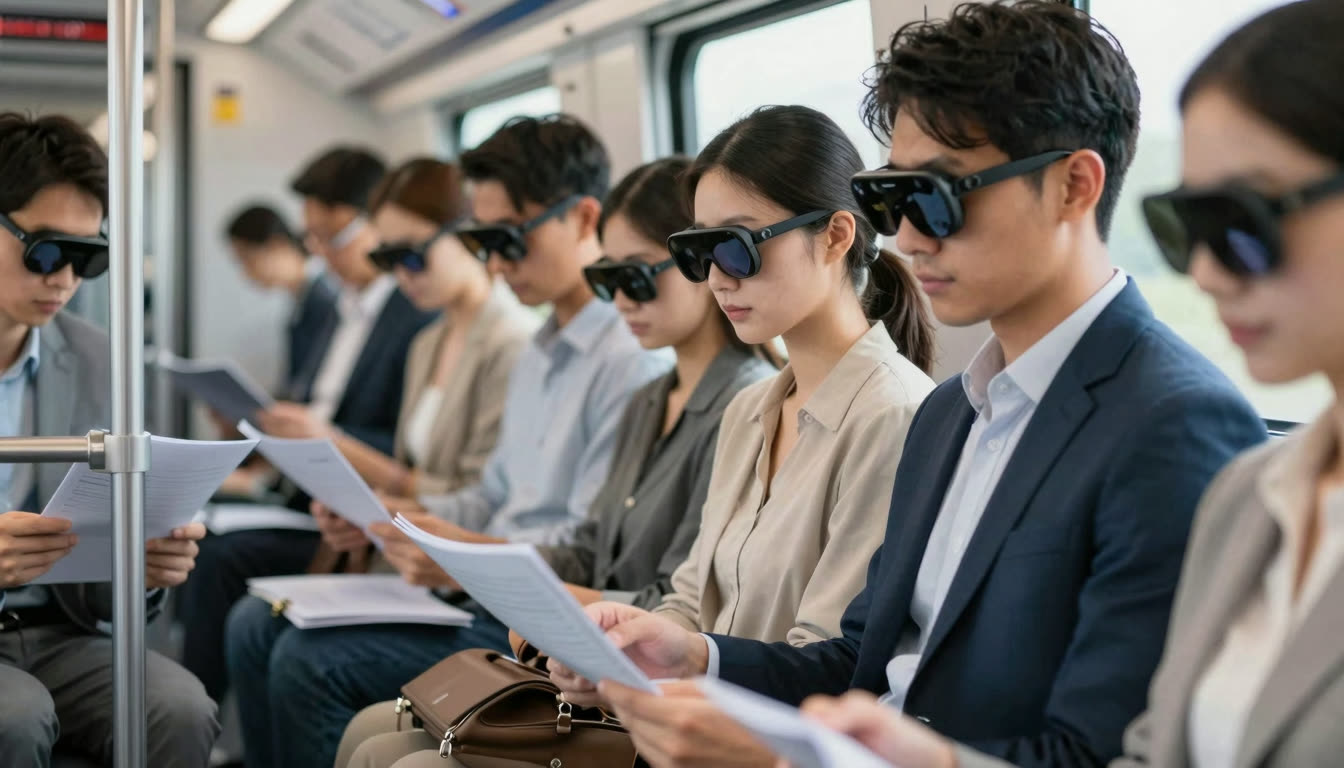
More Likely Near-Term Version: By 2030, AR glasses (Apple Vision Pro successors, Meta smart glasses) overlay bionic formatting and real-time translations onto physical books and documents, creating a hybrid reading experience.
Timeline: AR-enhanced reading by 2028-2030. Direct neural text transmission remains experimental until at least 2035.
Timeline at a Glance
Here is how the six core predictions line up across the rest of the decade, from early pilots to mainstream adoption:
| Prediction | First pilots | Mainstream adoption | What it changes |
|---|---|---|---|
| Bionic reading as a standard feature | 2025 | 2027 | Reading accessibility built into every platform |
| AI study buddies | 2026 | 2028 | Replaces ~40% of basic tutoring |
| Reading profiles over reading levels | 2027 | 2029-2030 | Personalized, data-rich assessment |
| Interactive "living textbooks" | 2026-2027 | 2028-2029 | Publishers ship adaptive, AI-native books |
| Speed reading as a core skill | 2026-2027 | 2029-2030 | WPM tracked like typing speed |
| AI literacy to close the divide | Now | 2027-2028 | Tool access plus strategy decides outcomes |
These dates are projections, not guarantees, but the underlying technology already exists. The students building strong reading comprehension habits today are the ones positioned to benefit first.
How to Prepare for the AI Reading Revolution (Starting Today)
1. Build Your Bionic Reading Habit Now: Don't wait for schools or employers to adopt these tools. Download FastRead on iOS or Android, or use the web app. Convert your textbooks, research papers, and ebooks to bionic format. Track your speed improvement weekly.
2. Develop Meta-Reading Skills: Learn to read at different speeds for different purposes. Bionic reading for active study. Skimming for research. Deep reading for complex arguments. AI summaries for review. The students who master this flexibility will dominate.
3. Treat AI Assistants as Study Partners, Not Shortcuts: Use Kindle's "Ask This Book" or Google's "Catch me up" features to check your comprehension, not replace it. Read the chapter first, then ask the AI questions to identify gaps.
4. Build Your Reading Stack: Combine tools strategically. Use FastRead's bionic reader for textbooks, the focus reader for distraction-free study sessions, the vocabulary builder for new terms, and the reading tracker to measure progress.
5. Advocate for Free Access: The worst outcome is a two-tier system where wealthy students get AI reading assistants and everyone else falls behind. Support free tools like FastRead (which offers 11 professional reading tools completely free). Push your school to provide access to bionic reading and AI study tools.
The Bottom Line: The Future of Learning Is Already Here
Amazon's new AI recap features aren't just cool Kindle tricks, they're proof that major tech companies believe AI reading assistants are the future. Google, Spotify, and Kobo are all racing to add similar features. The question isn't whether AI will transform how we read and learn, but whether you'll be an early adopter or play catch-up.
The students who adopt bionic reading apps, experiment with AI study tools, and build effective reading systems today will have a 5-year advantage over peers by the time these technologies become standard. That advantage compounds: reading faster means learning more means better grades means better opportunities.
The best part? You don't need to wait for your school, university, or employer to catch up. Try FastRead's bionic reader right now - convert any text, ebook, PDF, or article into bionic format and feel the difference immediately. It's completely free on web, iOS, and Android.
The reading revolution is here. Are you ready?
About the author
Alex Rivera
Productivity Coach
Alex Rivera is a productivity coach who writes about focus, reading habits and getting through your reading list without burning out. Practical, no-fluff advice you can apply the same day.
More from Alex Rivera →Read faster everywhere with the app
Bionic-read any article, PDF or ebook on the go, save your library, and track your speed. Free to download.


 Scan to get the app - opens the App Store on iPhone/iPad, Google Play on Android