The 2026 Reading Habit Crisis: Why AI Summarizers Are Making Us Read More But Remember Less (And What the Brain Science Says to Do Instead)

Sophie Bennett
Reading Science Writer
If you've been scrolling through productivity TikTok or LinkedIn lately, you've probably noticed something weird: everyone's reading more than ever, with audiobooks on 2x speed during commutes, AI summaries of research papers, ChatGPT condensing entire books into bullet points, but ask someone what they read last month and you'll get a blank stare.
Welcome to the 2026 reading crisis. We're consuming more text than any generation in history, but retaining less of it. And new brain science published just this month explains exactly why, and what you can do about it.
According to Scribd's 2026 State of Reading Report, 57% of readers now consume both audio and text formats, and audiobooks have officially overtaken ebooks as the most popular digital format. Meanwhile, an essay series in Educational Technology & Change Journal (June 2026) warns that AI is making reading "more abundant and less deep." We're turning every spare moment into reading time, but our brains aren't actually processing what we're consuming.
The science backs this up. Recent EEG and behavioral studies from MIT, Swiss research labs, and the 2026 CHI conference show that while AI tools help us speed through more content, cognitive engagement and close reading are declining. We're skimming the surface of everything and diving deep into nothing. This pattern is a textbook example of information overload, and it has measurable consequences for memory and comprehension.
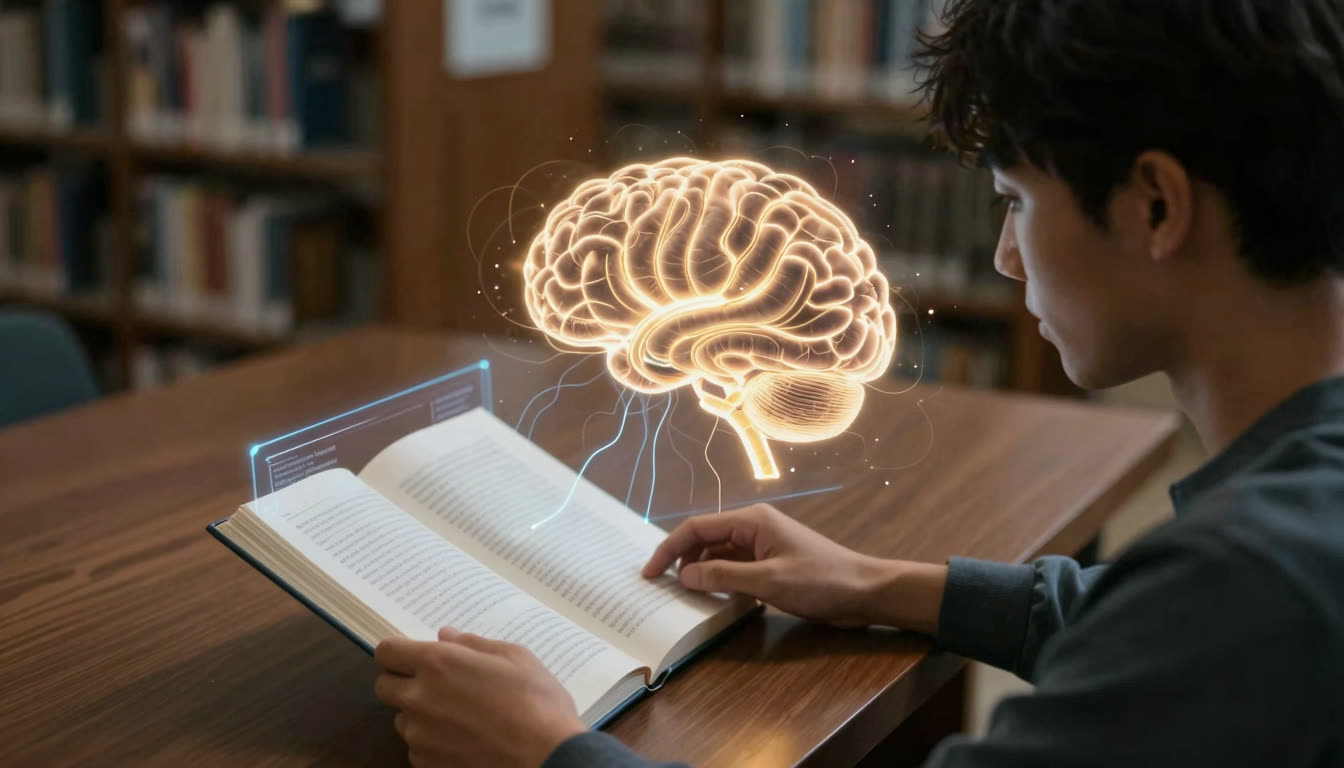
Here's the uncomfortable truth: your brain on AI summaries looks very different from your brain actually reading.
What's in this article
- What the new brain science actually shows
- The AI summarizer trap and why it's killing your memory
- The solution is reading smarter, not less
- When AI summarizers actually make sense
- The ADHD factor: why bionic reading helps when AI summarizers don't
- The bottom line: read more by reading better
- Try it yourself (free, right now)
What the New Brain Science Actually Shows
Paper vs. Screen: Your Brain Works Harder on Screens
A groundbreaking University of Tokyo study published in PLOS One this month used fMRI scanners to watch people's brains while reading manga narratives. Half the participants started on paper, half on tablets, then everyone finished the story inside the scanner.
The results? People who read on paper answered comprehension questions faster and showed less activation in frontal language processing areas. Translation: their brains had more "spare capacity" to organize and remember narrative details. Screen readers had to work harder for worse comprehension.
This doesn't mean you should throw away your Kindle. It means your brain processes digital text differently, and you need tools that compensate for that difference.
Your Brain Reads Faster Than Your Eyes (And That's the Problem)
New research from the University of South Florida tracked eye movements and brain activity while 55 adults read 180 sentences on screen. Even when participants skipped words while skimming, their brains had already processed information about those words through peripheral vision.
Here's the fascinating part: when a skipped word didn't fit the sentence context, the brain reacted strongly, proving that reading is a predictive "team effort" between eyes and brain, not a word-by-word process.
This is exactly why bionic reading works. By creating visual fixation points at the beginning of each word, bionic text helps your eyes keep pace with your brain's predictive processing. You're not slowing down; you're syncing up.
The AI Summarizer Trap (And Why It's Killing Your Memory)
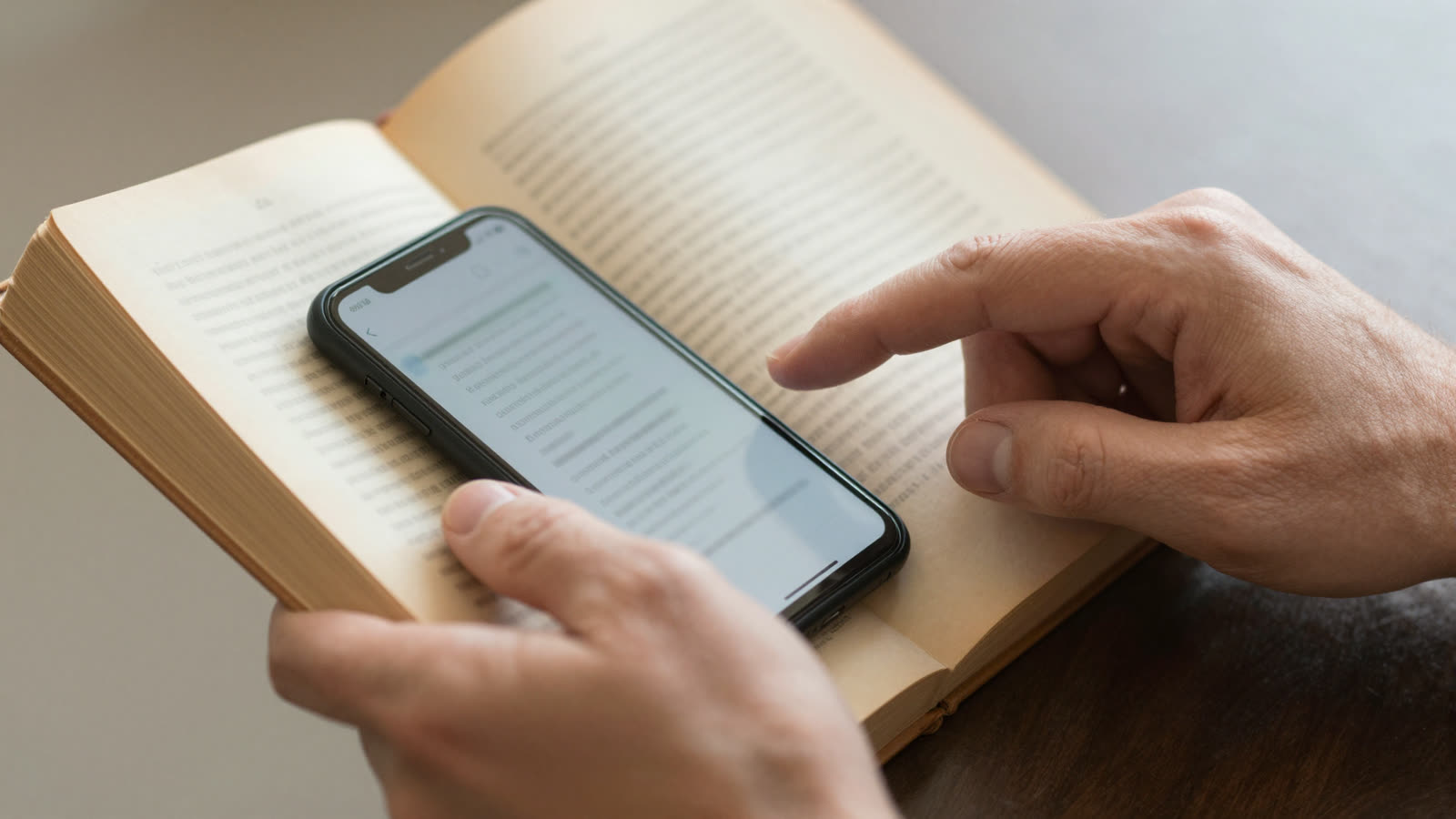
AI summarizers promise to save time. Paste in a 50-page PDF, get a 5-bullet summary, move on. Sounds efficient, right?
Except your brain learns through the process of reading, not just the end result. When you read actively, even quickly, you're:
- Building neural pathways that connect new information to existing knowledge
- Engaging working memory which transfers facts to long-term storage
- Creating contextual anchors that help you recall information later
- Developing critical thinking by evaluating arguments as you encounter them
When an AI reads for you and hands you the CliffsNotes, none of that happens. You get the information but not the understanding. You can repeat the summary but you can't apply the knowledge. Research on reading comprehension consistently shows that active engagement with text is the single biggest predictor of long-term retention.
The Educational Technology & Change Journal essay puts it bluntly: AI tools are turning "dead time" into listening time, but they're also training us to be passive consumers rather than active readers.
The Solution Is Reading Smarter, Not Less
Here's what the research actually suggests you should do:
1. Speed Up Your Reading, Not Your Skipping
Instead of having AI summarize everything, learn to read faster while maintaining comprehension. Bionic reading helps by creating artificial fixation points that guide your eyes through text more efficiently. You're still doing the cognitive work, just faster.
Studies show bionic reading can increase reading speed by up to 50% while improving focus and comprehension. That's the difference between skimming a textbook chapter in 45 minutes versus actually reading it in 30.
2. Test Your Actual Speed (You're Probably Slower Than You Think)
Most people overestimate their reading speed by 30-40%. Before you reach for the AI summarizer, find out your baseline with a reading speed test. Measure your words per minute (WPM) with normal text, then try the same passage in bionic format.
The average adult reads 200-250 WPM. With bionic reading training, many people hit 300-400 WPM without sacrificing comprehension. That's reading an entire book in the time you'd spend listening to a 2x audiobook, and actually remembering it.
3. Use Distraction-Free Modes for Deep Reading
The University of Tokyo study suggests that screen reading requires more cognitive effort partly because of distractions. Notifications, tabs, the urge to switch apps, all of it fragments attention.
When you're reading something important, use a focus reader that strips away everything except the text. Combine it with bionic formatting and you get the speed benefits of digital reading with the comprehension benefits of paper.
4. Practice With Progressively Harder Texts
Your reading speed is a skill you can train. Start with practice texts at your current comfortable speed, then gradually increase difficulty and length.
The University of South Florida research shows your brain is already processing words in peripheral vision. Bionic reading trains your eyes to trust that peripheral processing instead of fixating on every single word.
5. Track Your Progress (What Gets Measured Gets Improved)
Use a reading tracker to monitor your WPM improvement over time. Most people see measurable gains within 2-3 weeks of consistent practice.
The goal isn't to become a speed-reading machine. It's to read at a pace that matches your brain's natural processing speed, which is almost always faster than your current reading speed.
When AI Summarizers Actually Make Sense
AI summarizers aren't evil. They're just misused. Knowing when to use them and when to avoid them is the key to getting value without sacrificing comprehension.
| Situation | Use AI summarizer? | Why |
|---|---|---|
| Screening papers before deciding which to read fully | Yes | Saves time before deep investment |
| Getting an overview of a 200+ page report where you need only sections | Yes | You'll read the relevant parts fully |
| Processing emails and newsletters to prioritize attention | Yes | Low-stakes triage task |
| Creating study guides after you've already read the material | Yes | Reinforces, doesn't replace |
| Replacing actual reading of textbooks and study materials | No | You lose the neural encoding process |
| "Reading" books by only consuming summaries | No | No retention, no application |
| Processing research papers you plan to cite | No | You must understand what you cite |
| Any situation where you need to apply or discuss the information | No | Shallow summaries don't transfer to real use |
If you're going to be tested on it, write about it, or use it in your work, you need to actually read it. A text summarizer should supplement your reading, not replace it. For a deeper look at how AI tools fit into a sustainable reading workflow, see our guide to building a daily reading habit that sticks.
The ADHD Factor: Why Bionic Reading Helps When AI Summarizers Don't
Here's something the research doesn't talk about but users report consistently: bionic reading is particularly effective for people with ADHD and dyslexia.
Why? Because the cognitive challenge isn't understanding the material. It's maintaining focus long enough to get through it. AI summaries don't solve that problem; they just make you dependent on external processing.
Bionic text creates visual anchors that help with tracking and reduce the "word soup" effect. It's like training wheels that actually help you ride faster. Many users report that bionic reading is the first time they could read textbooks without re-reading the same paragraph five times.
If you're looking for the best ADHD reading app, you want something that helps you focus on the actual text, not something that reads it for you. FastRead is a completely free bionic reading app available on iOS, Android, and web that's specifically designed to help readers with focus challenges.
The Bottom Line: Read More by Reading Better
The 2026 reading crisis isn't about reading too much or too little. It's about reading in ways that don't match how our brains actually work.
AI summarizers promise efficiency but deliver shallow understanding. Speed reading courses promise 1000+ WPM but sacrifice comprehension. Audiobooks on 2x speed let you "read" more but don't create the neural pathways that help you remember.
Bionic reading sits in the sweet spot: it helps you read faster while maintaining (or improving) comprehension because it works with your brain's natural processing, not against it.
The science is clear: your brain is already predicting words before your eyes reach them. Bionic text just helps your eyes catch up.
Try It Yourself (Free, Right Now)
You don't need to take my word for it. Here's how to test whether bionic reading actually works for you:
- Baseline test: Take a reading speed test with normal text. Note your WPM and comprehension.
- Convert something you need to read: Paste an article, PDF, or chapter into the bionic reader. It works with any text.
- Read in focus mode: Use the focus reader to eliminate distractions.
- Retest after a week: Take another speed test. Most people see 15-30% improvement within days.
FastRead is completely free with 11 professional reading tools. Download it from the App Store for iPhone/iPad, Google Play for Android, or use it at fastread.app, no subscription required.
Because the solution to reading too much isn't reading less. It's reading smarter. And the science says that starts with helping your eyes keep up with your brain.
About the author
Sophie Bennett
Reading Science Writer
Sophie Bennett translates reading science - eye-tracking studies, fixation research and comprehension data - into plain-English guidance. She grounds FastRead's articles in what the research actually shows.
More from Sophie Bennett →Read faster everywhere with the app
Bionic-read any article, PDF or ebook on the go, save your library, and track your speed. Free to download.


 Scan to get the app - opens the App Store on iPhone/iPad, Google Play on Android