5 Myths About How Gen Z 'Discovered' Bionic Reading on TikTok (The Real Story Will Surprise You)

Alex Rivera
Productivity Coach
Introduction: The TikTok Origin Story That Never Happened
There are a lot of misconceptions about bionic reading floating around the internet, especially when it comes to Gen Z and TikTok. If you've spent any time scrolling through productivity TikTok or BookTok, you've probably seen videos claiming that "Gen Z discovered this secret reading hack" or "TikTok invented bionic reading."
Spoiler alert: They didn't.
Bionic reading has been around longer than most viral TikTok trends, and the story of how it actually spread is way more interesting (and complicated) than the myth suggests. As someone who's watched the bionic reading conversation evolve from niche speed-reading forums to mainstream social media, I've seen these myths take on a life of their own.
Let's bust some of the biggest misconceptions about bionic reading, Gen Z, and TikTok, because the real story is actually more fascinating than the viral version.
What's in this article
- Myth #1: Gen Z "discovered" bionic reading on TikTok in 2022
- Myth #2: Bionic reading only works because of the TikTok placebo effect
- Myth #3: All bionic reading apps are the same
- Myth #4: Bionic reading is just for people with ADHD or dyslexia
- Myth #5: You can't use bionic reading for "real" books
- Myth #6: Bionic reading will ruin your "normal" reading ability
- Myth #7: The bionic reading trend is already over
- The real story: how bionic reading actually spread
- Key takeaways
- Try it yourself
Myth #1: Gen Z "Discovered" Bionic Reading on TikTok in 2022
The Myth: TikTok videos love to claim that Gen Z stumbled upon bionic reading as some kind of hidden productivity secret in 2022, and it went viral from there.
Why People Believe It: Bionic reading did explode on TikTok in mid-2022, with millions of views on videos demonstrating the technique. For many Gen Z users, that was their first exposure to it, so it felt like a new discovery.
The Truth: Bionic reading as a concept has existed in various forms since the early 2000s in speed-reading communities. The specific term "Bionic Reading" was trademarked by a Swiss typographic designer in 2021, but the underlying principle, creating visual fixation points by emphasizing parts of words, has been studied in reading research for decades. You can read more about the trademarked technique on Wikipedia's Bionic Reading entry.
What actually happened in 2022 was that the Bionic Reading company launched their API and gained traction on Twitter first, then spilled over to TikTok. Gen Z didn't discover it; they popularized it and made it accessible to a mainstream audience. That's actually more impressive than "discovering" it, because it shows Gen Z's ability to recognize genuinely useful tools and spread them quickly.
The real innovation wasn't the concept itself, but apps like FastRead making bionic reading accessible and free for everyone, with no expensive subscriptions, no paywalls, just open your ebook or PDF and start reading faster.
Here is a quick view of how the popular myths stack up against what actually happened:
| The TikTok myth | The real story |
|---|---|
| Gen Z discovered bionic reading in 2022 | The concept dates to early-2000s speed-reading research; Gen Z popularized it |
| It only works because of TikTok placebo | It builds on real research about saccades and fixation points |
| All bionic reading apps are the same | Features, pricing, and document support vary widely |
| It's only for ADHD or dyslexia | Helpful for those readers, and useful for anyone who reads a lot |
| It only works for short articles | Modern apps handle full ebooks, PDFs, and long documents |
| It will ruin your normal reading | It adds a skill; your regular reading ability stays intact |
| The trend is already over | It evolved from viral moment into a standard productivity tool |
Myth #2: Bionic Reading Only Works Because of the TikTok Placebo Effect
The Myth: Skeptics claim that bionic reading only "works" because TikTok hyped it up, and it's just a placebo effect, where people think they're reading faster, but they're not actually improving.
Why People Believe It: Fair question, honestly. Lots of productivity trends are more hype than substance, and the viral nature of TikTok makes people suspicious of anything that spreads too quickly.
The Truth: While individual results vary, the science behind visual fixation points isn't TikTok pseudoscience, it's based on legitimate reading research about saccades (eye movements) and how our brain processes text. Studies on reading efficiency have shown that reducing the number of fixation points per line can increase reading speed.
Here's what's real: Your brain doesn't read every letter in a word. It recognizes word shapes and patterns, then fills in the gaps. That's why you can raed tihs snetecne even thouhg the mdilde of ecah wrod is srbamcled. Bionic reading leverages this by bolding the first part of each word, creating consistent fixation points that guide your eye movement more efficiently.
The placebo effect might account for some initial enthusiasm, but the fact that people with ADHD and dyslexia consistently report improved focus and comprehension suggests there's something real happening here. Try our Speed Test to measure your actual WPM before and after, because numbers don't lie.
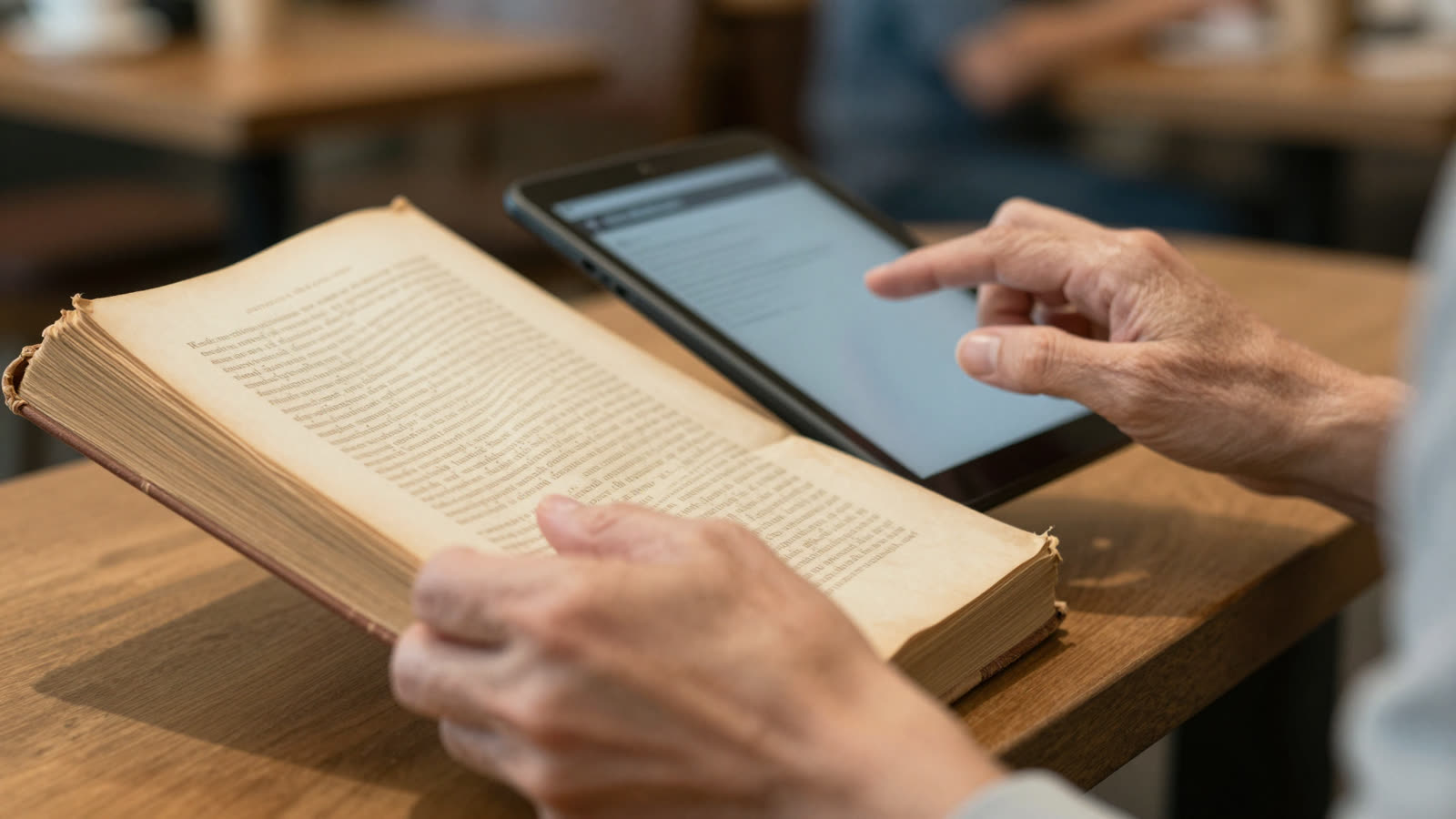
If you want a deeper look at how reading habits differ on screens, the Nielsen Norman Group's research on how people read online is a useful companion to this discussion.
Myth #3: All Bionic Reading Apps Are the Same (Just Use the Free One TikTok Links To)
The Myth: TikTok videos often link to whichever bionic reading app sponsored the video or appears first in search results, implying they're all basically identical.
Why People Believe It: When you're new to bionic reading, one bolded-text app looks pretty much like another. Why wouldn't you just grab whatever TikTok recommends?
The Truth: The quality, features, and pricing of bionic reading apps vary wildly. The original Bionic Reading app, for example, has a limited free tier and charges $4.99/month for full access. Some apps only work as browser extensions. Others use RSVP technology (showing one word at a time) which is completely different from bionic reading.
FastRead is a completely free bionic reading app available on iOS, Android, and web with 11 professional reading tools, no subscription required. You can open actual ebooks and PDFs, not just paste text into a converter. That's a huge difference when you're trying to read a 300-page textbook or research paper.
The app you choose matters because you're training your brain to read in a new way. You want something with a Focus Reader mode, a Reading Tracker to monitor progress, and the ability to practice with curated texts. Not all apps offer that, despite looking similar in a 15-second TikTok video.
Myth #4: Bionic Reading Is Just for People with ADHD or Dyslexia
The Myth: Many TikTok videos position bionic reading exclusively as an accessibility tool for neurodivergent readers, implying it's not useful for "regular" readers.
Why People Believe It: Bionic reading is incredibly helpful for people with ADHD and dyslexia, and many users report it's life-changing for maintaining focus and tracking lines. So the association makes sense, and it's genuinely great for accessibility awareness.
The Truth: While bionic reading is an excellent ADHD-friendly reading app, it's useful for literally anyone who reads. Students cramming for exams, professionals processing dozens of reports, researchers scanning academic papers, language learners parsing foreign text, book lovers trying to read more, all benefit from reading faster with better comprehension.
Think about how much you read in a day: emails, articles, documentation, news, messages, ebooks. Now imagine cutting that time by 20-30% while retaining the same (or better) comprehension. That's not just an accessibility feature, it's a productivity superpower.
The misconception that bionic reading is "only for ADHD" actually limits its adoption among people who could massively benefit. You don't need a diagnosis to want to read faster and focus better. You just need too much to read and not enough time, which describes basically everyone in 2026.
Myth #5: You Can't Use Bionic Reading for "Real" Books, Only Short Articles
The Myth: Some TikTok demonstrations only show bionic reading with short text snippets or articles, leading people to believe it doesn't work for full-length books or academic papers.
Why People Believe It: Early bionic reading tools were mostly web-based text converters where you'd paste a few paragraphs. It wasn't obvious how you'd apply this to a 400-page novel or dense research paper.
The Truth: Modern bionic reading apps absolutely work with full ebooks, PDFs, and long documents. FastRead lets you open ePub files, PDFs, and documents directly, so you're reading the actual book in bionic format, not copying and pasting chapters into a converter.
This is actually where bionic reading shines brightest. Reading a 500-word article 20% faster saves you maybe 30 seconds. Reading a 200-page textbook 20% faster saves you hours. The compound effect over an entire book is massive, especially for students and researchers who need to get through multiple dense texts per week.
The Bionic Reader tool works for quick conversions, but if you're serious about reading faster, you want a proper ebook reader app that handles full documents. That's the difference between a TikTok party trick and an actual productivity tool you'll use daily.
Myth #6: Bionic Reading Will Ruin Your "Normal" Reading Ability
The Myth: Some people worry that training their brain to read bionic text will make them dependent on it, and they'll struggle to read regular text afterward.
Why People Believe It: It's a reasonable concern. If you're retraining your reading patterns, what happens when you pick up a regular paperback or need to read non-formatted text?
The Truth: Your brain is more adaptable than that. Bionic reading doesn't "overwrite" your normal reading ability, it adds a new skill. It's like learning to type faster; you don't forget how to handwrite.
Most people use bionic reading strategically: for textbooks, work documents, research papers, and situations where speed and efficiency matter. Then they read regular format for leisure, creative writing, or when they want to slow down and savor the prose. You can switch between formats easily.
In fact, many users report that practicing with bionic text actually improves their normal reading speed over time, because they've trained their eyes to move more efficiently and their brain to recognize word patterns faster. The skills transfer.
If you're worried about dependency, start with the Practice Texts to build the skill gradually, then use it when it makes sense for your reading goals. You're in control.
Myth #7: The Bionic Reading Trend Is Already Over (So Why Bother?)
The Myth: Some people dismiss bionic reading as just another TikTok trend that peaked in 2022 and is now irrelevant.
Why People Believe It: TikTok trends do tend to burn bright and fade fast. Remember the Pomodoro Technique discourse? The "that girl" aesthetic? Productivity TikTok moves quickly.
The Truth: Bionic reading isn't a trend, it's a tool. The viral TikTok moment introduced it to millions of people, but the ones who actually found it useful kept using it long after the videos stopped trending. That's how you separate genuine productivity tools from temporary hype.
Interestingly, recent data from March 2026 shows Gen Z is shifting away from TikTok for some content discovery, with Adobe data showing their TikTok-over-Google preference dropped from 8% to 4% between 2024-2026. At the same time, apps like Shelf (a media-tracking app for books, music, and movies) are gaining Gen Z adoption as they move away from Goodreads. This suggests Gen Z is maturing in how they discover and use reading tools, with less viral-moment-chasing and more intentional tool selection.
Bionic reading has staying power because it solves a real problem: information overload. We're reading more than ever (emails, articles, documents, ebooks), and anything that helps us process that information faster and with better focus is here to stay. The TikTok virality just accelerated awareness of something that would have spread anyway.
The Real Story: How Bionic Reading Actually Spread (And Why It Matters)
So what's the truth behind bionic reading's rise? It's not a simple "TikTok discovered it" story, it's more interesting than that.
The concept evolved from decades of reading research. A Swiss company formalized and branded it in 2021. Twitter tech circles picked it up first. Then TikTok and BookTok exploded it into mainstream awareness in 2022. Gen Z tested it, validated it, and demanded better tools. Developers responded with free, accessible apps that actually work with real books and documents.
Now, in 2026, bionic reading has matured from viral trend to legitimate tool. It's particularly valuable as digital eye strain becomes a more recognized issue. An April 2026 study found that educators with moderate-to-severe digital eye strain report symptoms affecting both work and home life. Tools that make reading less visually taxing aren't just productivity hacks; they're health interventions.
The Gen Z contribution wasn't "discovering" bionic reading, it was democratizing it. They pushed back against expensive paywalls, demanded mobile apps, created tutorials, shared results, and made it accessible to students who couldn't afford premium subscriptions. That's actually more culturally significant than any single discovery.
Key Takeaways: What You Should Actually Know About Bionic Reading
What's True:
- Bionic reading is based on legitimate reading science about visual fixation points
- It can genuinely increase reading speed (typically 20-30%, sometimes up to 50% with practice)
- It's especially helpful for people with ADHD, dyslexia, or focus challenges, but useful for everyone
- Modern apps work with full ebooks, PDFs, and documents, not just short text snippets
- It doesn't damage your normal reading ability; the skills are complementary
What's False:
- Gen Z didn't invent or discover bionic reading; they popularized it
- It's not just a placebo effect or TikTok hype
- Not all bionic reading apps are the same; features and pricing vary dramatically
- It's not only for neurodivergent readers; anyone who reads a lot can benefit
- The trend isn't over; it's evolved into a standard productivity tool
Try It Yourself: See If the Hype Is Real
The only way to know if bionic reading works for you is to test it. Not with a 30-second TikTok demo, but with actual reading material you need to get through.
Start with our free Bionic Reader to convert some text and see how it feels. Then test your reading speed before and after to get actual numbers. If you like it, download FastRead for iOS or Android to use it with real ebooks and PDFs.
Give it a week of actual use, not just playing around, but reading textbooks, work documents, or books you're actually trying to finish. Track your progress with the Reading Tracker and see if your WPM improves and your comprehension holds steady.
Then decide for yourself whether it's worth keeping in your reading toolkit. Don't let TikTok myths (or TikTok skepticism) make the decision for you. The best productivity tools are the ones you actually use, not the ones that go viral.
And hey, if it doesn't work for you? That's fine too. But at least you'll know from experience, not from someone's hot take about what Gen Z supposedly discovered on TikTok.
About the author
Alex Rivera
Productivity Coach
Alex Rivera is a productivity coach who writes about focus, reading habits and getting through your reading list without burning out. Practical, no-fluff advice you can apply the same day.
More from Alex Rivera →Read faster everywhere with the app
Bionic-read any article, PDF or ebook on the go, save your library, and track your speed. Free to download.


 Scan to get the app - opens the App Store on iPhone/iPad, Google Play on Android