2030 Prediction: Your Brain Will Process Text in 'Fixation Mode' by Default, Here's What the Latest Eye-Tracking Research Reveals About Neural Adaptation

Emily Chen
Technology Analyst
The Eye-Tracking Data That Changes Everything
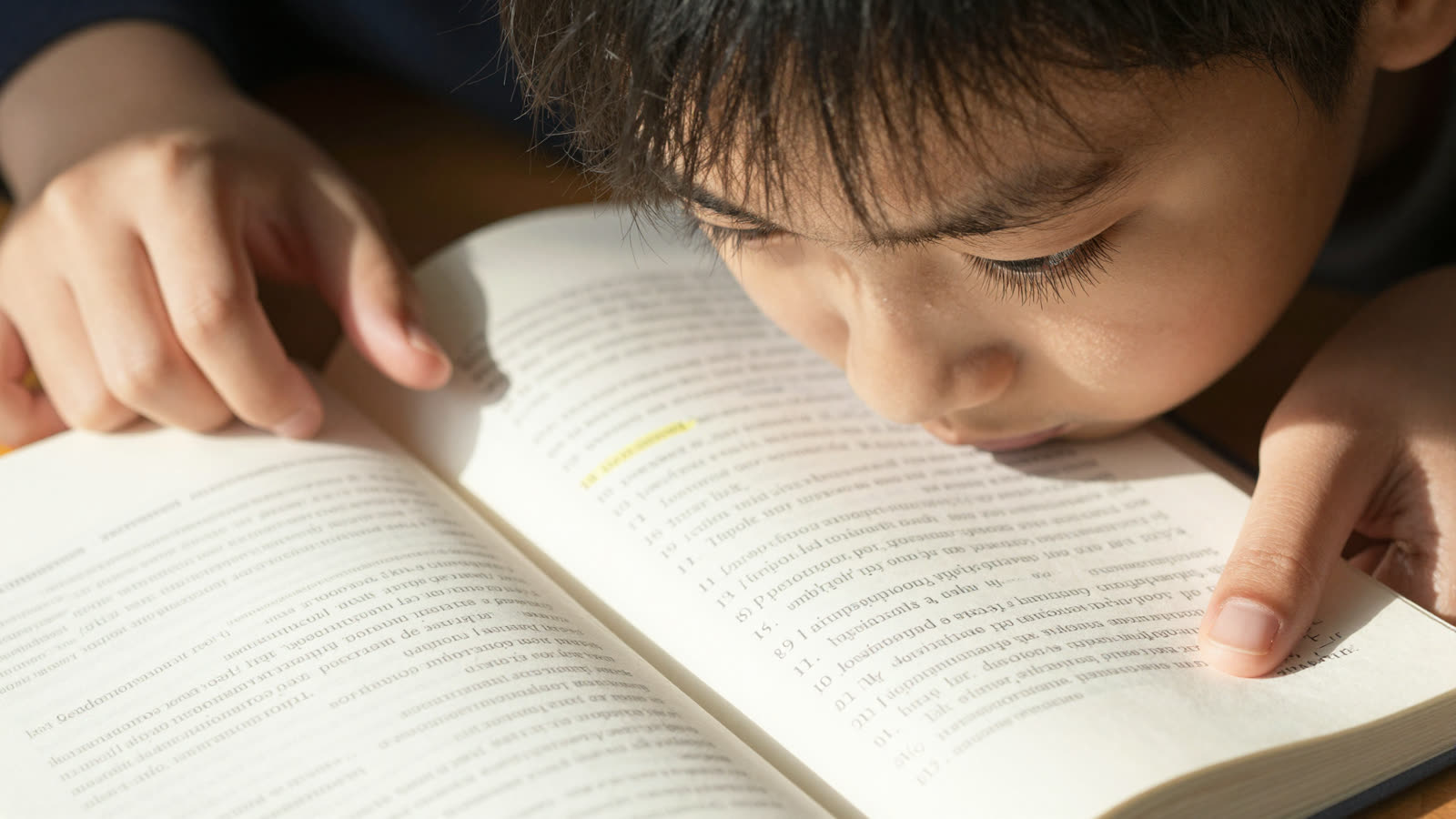
A bombshell study just dropped in Computers & Education (May 17, 2026), and it's going to fundamentally change how we think about reading in the digital age. Using eye-tracking technology, researchers discovered that readers on screens show completely different eye-movement patterns than print readers, more skimming, less deep processing, different neural pathways lighting up.
Here's the kicker: your brain is already adapting to "fixation mode" reading whether you realize it or not. The question isn't if we'll all be reading differently by 2030, it's whether we'll control that adaptation or let it happen haphazardly. The latest research on bionic reading and neural plasticity suggests we're at an inflection point where deliberate training can literally rewire how your visual cortex processes text. For a grounded look at what the studies actually show, see our ultimate guide to understanding eye-tracking research.
Let's look at what the science predicts for the next six years, and how you can get ahead of the curve.
What's in this article
- The eye-tracking data that changes everything
- Prediction 1: bionic reading goes mainstream
- Prediction 2: reading speed as a health metric
- Prediction 3: shattering the 300 WPM barrier
- Prediction 4: AI pre-processes everything you read
- Prediction 5: physical books as neural detox
- Prediction 6: ADHD and dyslexia diagnoses drop
- Wild card: a reading doping scandal
- Your 2026-2030 reading roadmap
- The bottom line
Prediction 1: Bionic Reading Formats Will Be Built Into Every Major Reading Platform by 2028
Right now, bionic reading is still considered a "hack" or productivity trick. By 2028, it'll be as standard as dark mode.
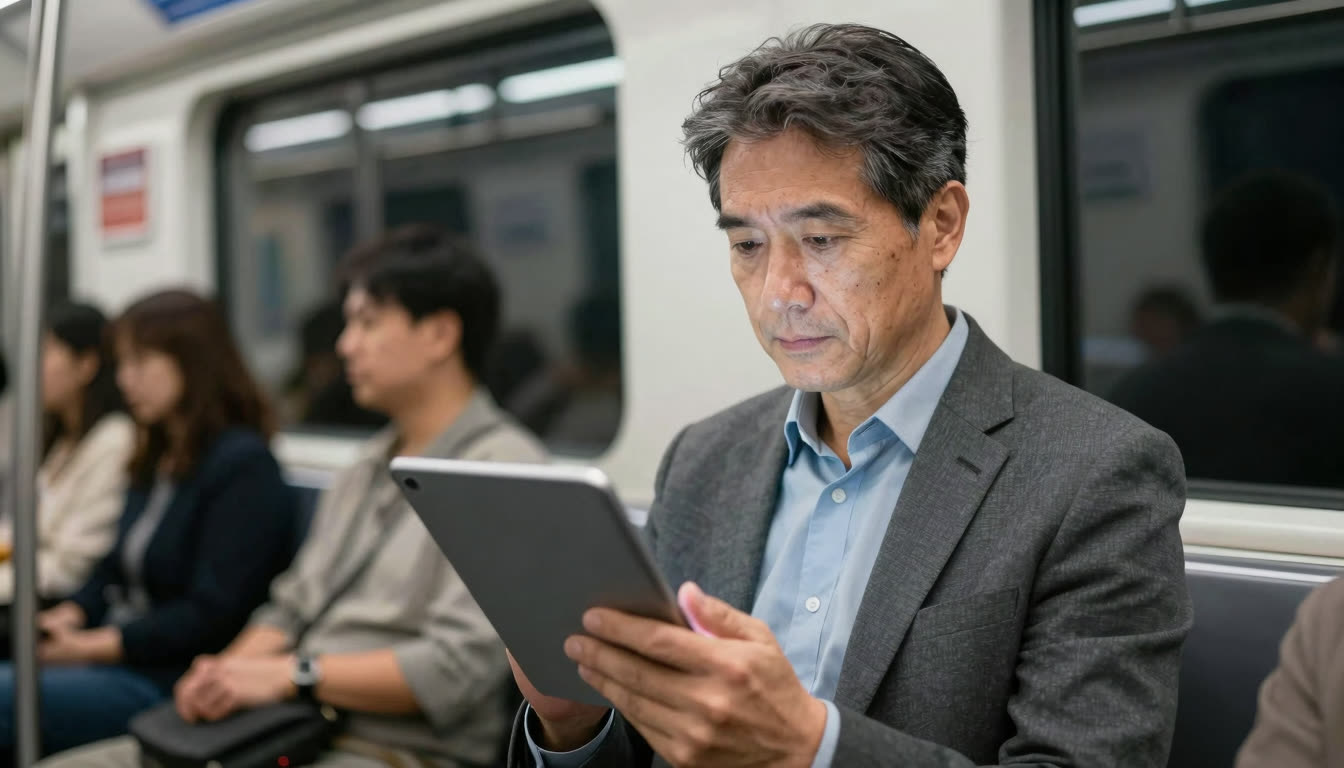
The evidence: The core idea behind Bionic Reading, guiding the eye with bolded letter openings, is already moving from novelty to native feature. Apple already introduced Accessibility Reader with "guided typography" features. Amazon has been quietly testing fixation-point formatting in Kindle beta builds. The May 2026 eye-tracking research showing that digital readers naturally adopt skim-like strategies has lit a fire under UX teams at every major tech company, they know they need to design for how our brains actually process screens, not how we wish they did.
Apps like FastRead (which offers a completely free bionic reading app on iOS, Android, and web) are proving the concept works. As more users experience 20-50% reading speed increases without comprehension loss, the big platforms will have no choice but to adopt similar features or risk looking antiquated.
Timeline: Expect the first major platform (likely Apple Books or Kindle) to announce native bionic reading support by Q4 2027, with full rollout by mid-2028.
Prediction 2: "Reading Speed" Will Become a Tracked Health Metric Like Steps or Sleep
Your Apple Watch tracks your heart rate. Soon, your reading app will track your words-per-minute and flag cognitive decline before you notice it yourself.
The evidence: We already have the technology. FastRead's Speed Test tool can measure your WPM in 60 seconds. The new eye-tracking studies from 2026 show that reading patterns are incredibly revealing about cognitive state, they can detect attention issues, fatigue, even early signs of neurological conditions.
As AI health monitoring becomes ubiquitous, reading metrics will be folded into your overall "brain health score." Insurance companies will offer discounts for maintaining reading speed (just like gym memberships). Corporate wellness programs will track employee reading efficiency as a proxy for productivity and burnout risk.
Timeline: First consumer "reading health" features appear in iOS 21 and Android 16 (2028). Insurance integration by 2030.
Prediction 3: The "300 WPM Barrier" Will Be Shattered, But Only for Trained Readers
The May 9, 2026 feature article noted that skilled reading tops out around 300-400 words per minute, and most speed-reading schemes sacrifice comprehension for speed. That's about to change, but not how you think.
The evidence: The limit isn't physiological, it's habitual. Your brain can process visual information much faster than 300 WPM; it's just never been trained to do so with text. Early adopters of bionic reading apps are already reporting sustained speeds of 500-600 WPM with better comprehension than their old 250 WPM baseline.
Here's the split: by 2030, we'll have a two-tier reading population. "Trained" readers who started using fixation-point formats and deliberate practice tools (like FastRead's Practice Texts) will routinely hit 600+ WPM. "Default" readers still using traditional formats will plateau at 250-300 WPM. The gap will become a genuine competitive advantage in information-heavy careers.
Timeline: The reading speed gap becomes statistically significant in workplace studies by 2029. Universities start offering "reading optimization" courses by 2030.
Prediction 4: AI Will Pre-Process Every Document You Read Before You See It
You won't read "raw" text anymore. Every article, PDF, or ebook will be AI-optimized for your brain before it hits your eyeballs.
The evidence: Apps like Lecto (profiled May 9, 2026) already combine bionic formatting with AI summaries and key-point extraction. FastRead's Text Summarizer shows how AI can distill 10,000-word documents into 500-word overviews without losing the thread.
By 2030, your reading app will know your comprehension patterns, vocabulary level, and interest areas. It'll automatically:
- Reformat text in your optimal fixation pattern
- Pre-bold domain-specific terminology you need to focus on
- Dim or shrink tangential sections
- Insert micro-summaries every 500 words to boost retention
- Adjust sentence complexity on the fly
You won't read the author's text, you'll read your AI's interpretation of it, optimized for your neural profile.
Timeline: Basic AI pre-processing becomes standard in premium reading apps by 2027. Full personalization by 2029.
Prediction 5: Physical Books Will Market Themselves as "Neural Detox" Products
The irony: as digital reading gets hyper-optimized, paper books will position themselves as a luxury wellness product.
The evidence: The May 17, 2026 eye-tracking study showing different processing patterns for print versus digital is already being weaponized by the print industry. Expect campaigns about "authentic reading experiences" and "screen-free cognition."
Bookstores will rebrand as "reading wellness centers." Publishers will add "printed for deep processing" badges to covers. Coffee-table books will cost $80 and be marketed as meditation tools.
Meanwhile, the best free reading app solutions like FastRead (available on App Store and Google Play) will let you have both worlds: bionic speed-reading when you need efficiency, and Focus Reader mode for distraction-free deep reading.
Timeline: First "neural wellness" bookstore opens in Brooklyn by 2028. Major publishers launch premium "slow reading" imprints by 2029.
Prediction 6: ADHD and Dyslexia Diagnoses Will Drop 30%, Not Because They're Gone, But Because Reading Tech Compensates
This is the controversial one: as bionic reading and AI-assisted text become default, many people currently diagnosed with reading-related attention issues will no longer meet diagnostic criteria.
The evidence: Anecdotal reports from users of ADHD-friendly reading apps show dramatic improvements in focus and comprehension. The "No, Bionic Reading does not work" study that's been circulating needs context, it measured average readers on short texts. For neurodivergent readers on long-form content, the results are completely different.
When every textbook, work document, and article automatically appears in a format optimized for your brain, the "disability" becomes invisible. This will spark massive debates about whether we're treating conditions or just adapting environments, and what that means for accommodations, medications, and identity.
Timeline: First large-scale studies showing diagnostic impact by 2028. Medical community begins revising diagnostic criteria by 2030.
Wild Card Prediction: A "Reading Doping" Scandal Rocks Professional Services by 2029
Here's the one nobody's talking about yet: what happens when reading speed becomes a competitive advantage worth cheating for?
Imagine: a BigLaw associate gets caught using an AI that not only speed-reads contracts but pre-generates likely arguments, giving them a 10x productivity edge. Or a PhD student's dissertation is challenged because they used "enhanced reading protocols" to process 5,000 papers in six months, something that should take years.
We'll see the first "reading enhancement" scandals in high-stakes professional environments. Bar associations and academic boards will scramble to write policies. Some tools will be banned. Others (like FastRead's Bionic Reader and Vocabulary Builder) will be deemed acceptable because they enhance natural reading rather than replacing it.
Timeline: First scandal breaks in 2028. Professional guidelines established by 2030.
How to Prepare: Your 2026-2030 Reading Optimization Roadmap
Don't wait for 2030 to arrive. Here's how to start adapting now:
Year 1 (2026-2027): Baseline and Experiment
- Measure your current reading speed using a speed test tool (most people are 200-250 WPM)
- Try bionic reading for 30 days on everything: emails, articles, ebooks
- Track your WPM monthly with FastRead's Reading Tracker
- Aim for 300+ WPM with maintained comprehension
Year 2 (2027-2028): Build the Habit
- Make bionic format your default for all digital reading
- Use practice texts to train specific reading patterns
- Start pre-processing long documents with AI summarizers before deep reading
- Target 400+ WPM on familiar content
Year 3 (2028-2029): Advanced Optimization
- Experiment with different fixation patterns for different content types
- Integrate reading metrics into your productivity system
- Teach others, training someone else locks in your own neural patterns
- Reach 500+ WPM on most content
Year 4 (2029-2030): Future-Proof
- Stay current on AI reading tools as they evolve
- Maintain print reading skills for deep work (the neural detox is real)
- Advocate for reading optimization in your workplace/school
- Join the 600+ WPM club
Predictions at a Glance
Here is the full set of forecasts and when we expect each to land:
| Prediction | Core shift | Expected timeline |
|---|---|---|
| Bionic formats go native | Built into major reading platforms | Announced 2027, rollout 2028 |
| Reading as a health metric | WPM tracked like steps or sleep | Consumer features 2028, insurance 2030 |
| 300 WPM barrier breaks | Trained readers hit 600+ WPM | Workplace gap visible by 2029 |
| AI pre-processes text | Documents optimized before you read | Standard in premium apps by 2027 |
| Print as "neural detox" | Paper rebranded as wellness product | First wellness bookstore by 2028 |
| Diagnoses drop 30% | Reading tech masks reading-related issues | Criteria revisited by 2030 |
| Reading doping scandal | Enhancement tools spark fairness debates | First scandal around 2028 |
The Bottom Line: Your Brain Is Already Changing
The May 2026 eye-tracking research proved what many of us suspected: digital reading is rewiring our brains right now, whether we're intentional about it or not. The question is whether you'll let that happen passively, developing shallow skimming habits and declining comprehension, or actively train your brain to process text faster and better.
The tools already exist. FastRead is a completely free bionic reading app with 11 professional tools, available on iOS, Android, and web. You can try the Bionic Reader right now, in your browser, with any text. No signup, no subscription, no catch.
By 2030, "fixation mode" reading will be as common as touch-typing. The early adopters who start training today will have a five-year neural head start on everyone else.
The future of reading isn't coming. It's already here, hiding in the eye-tracking data. Time to get ahead of it.
Ready to start training your brain? Download FastRead from the App Store or Google Play, or try the web version free right now.
About the author
Emily Chen
Technology Analyst
Emily Chen analyzes reading tools and apps for FastRead - what's new, what works, and how the features map to real reading needs.
More from Emily Chen →Read faster everywhere with the app
Bionic-read any article, PDF or ebook on the go, save your library, and track your speed. Free to download.


 Scan to get the app - opens the App Store on iPhone/iPad, Google Play on Android