2027 Prediction: Bionic Reading Will Replace AI Summarizers for Long Documents (Here's Why)

Daniel Cho
Reading Tech Analyst
The Reading Revolution Nobody Saw Coming
We're living through a weird moment in reading technology. Every week, another AI summarizer drops, promising to condense 50-page reports into bullet points. Adobe just launched Student Spaces in April 2026, joining NotebookLM in the race to turn your PDFs into podcasts and flashcards. The pitch? "Why read when AI can read for you?"
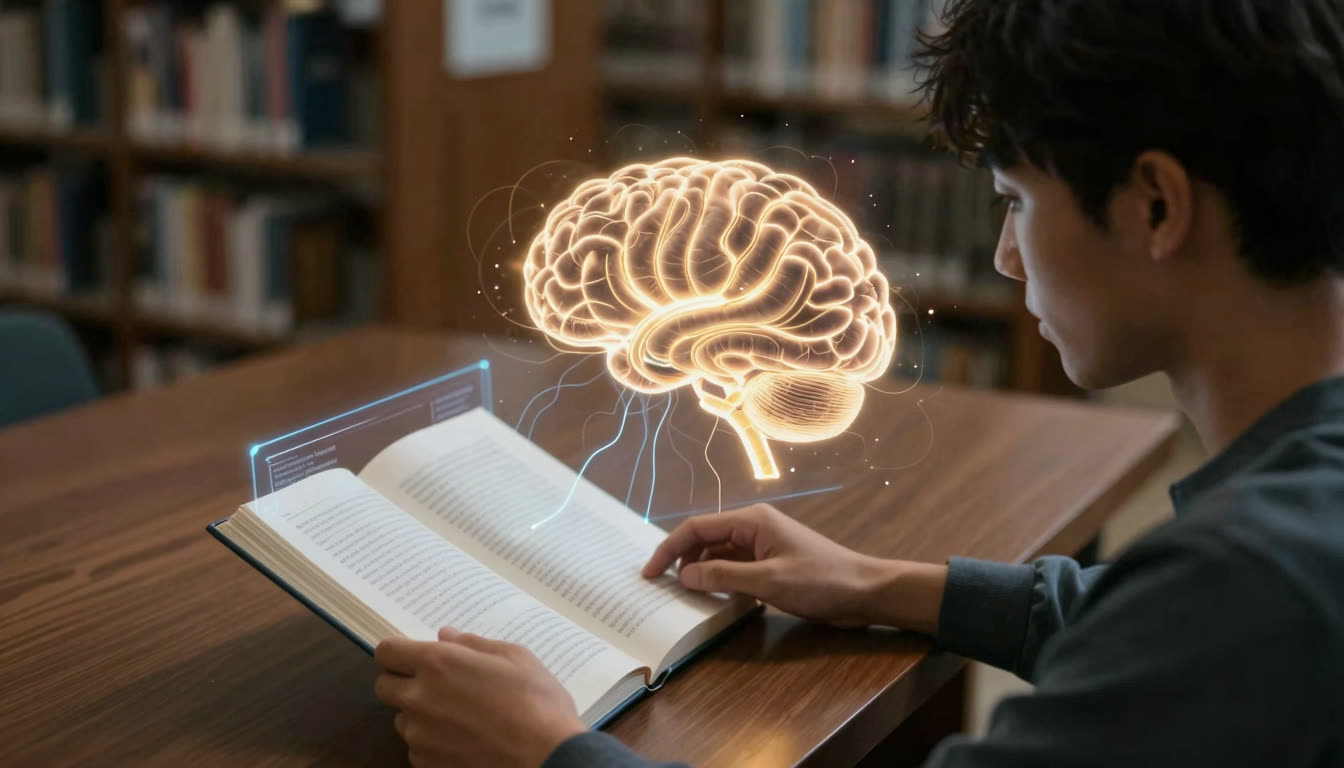
But here's my bold prediction for 2027: bionic reading will replace AI summarizers as the go-to tool for processing long documents. Not because AI summarization is bad, it's genuinely useful, but because people are realizing that reading the actual document in bionic format is often faster, more accurate, and way more satisfying than waiting for an AI summary that might miss critical nuances.
Let me explain why this shift is already happening, and what it means for how we'll read in 2027 and beyond. If you want a quick primer on the underlying idea, Wikipedia's overview of Bionic Reading is a neutral place to start.
What's in this article
- Apps will hit 100M+ users by late 2027
- Universities will require bionic reading tools
- AI summarizers will pivot to bionic first
- Reading speed will become a competitive advantage
- Ebooks will come pre-formatted in bionic reading
- Bionic reading will split into fast and deep modes
- How to prepare for the shift
- The bottom line
The Six Predictions at a Glance
Here is the full set of predictions, when each is likely to land, and what it actually means for you as a reader.
| # | Prediction | Likely timeline | What it means for you |
|---|---|---|---|
| 1 | Bionic apps hit 100M+ users | Mainstream by mid-2027 | Reading faster goes from niche hack to default habit |
| 2 | Universities require bionic options | Widespread fall 2027 | Course materials become easier to process, especially for ADHD and dyslexia |
| 3 | AI tools go "bionic first" | Widespread Q4 2027 | You skim the full document yourself, summarize only what matters |
| 4 | Reading speed becomes a resume skill | Corporate programs mid-2027 | Fast, accurate reading turns into a real career edge |
| 5 | Ebooks ship pre-formatted in bionic | Major publishers Q3-Q4 2027 | Finish long books in far less time, straight out of the box |
| 6 | Bionic splits into fast and deep modes | Advanced controls Q3 2027 | Match the formatting to the task instead of one-size-fits-all |
Prediction #1: Bionic Reading Apps Will Hit 100M+ Users by Late 2027
The prediction: Bionic reading adoption will explode from niche productivity hack to mainstream reading method, with combined users across all bionic reading platforms exceeding 100 million by Q4 2027.
Why it's happening: The science is finally catching up to the hype. Recent research on bionic reading shows it reduces eye jumps (saccades) and creates artificial fixation points that guide your eyes through text faster. Apps like Type Shifter are documenting 25% reading speed improvements without comprehension loss.
More importantly, students and professionals are discovering that reading a bionic-formatted 30-page report takes 15 minutes instead of 30, and they actually remember what they read. Compare that to feeding it to an AI summarizer, waiting 2 minutes, then reading a 500-word summary that inevitably misses something important.
The tipping point? When Apple or Google builds bionic reading directly into iOS/Android system readers. Until then, free apps like FastRead are making it accessible to everyone.
Timeline: Early adopters now, mainstream by mid-2027, ubiquitous by 2028.
Prediction #2: Universities Will Require Bionic Reading Tools for Accessibility
The prediction: By fall 2027, major universities will mandate that all digital course materials be available in bionic reading format, treating it like closed captions for text.
Why it's happening: The ADHD and dyslexia communities have been screaming about this for years. Bionic text isn't just faster, it's genuinely transformative for people with focus and tracking issues. Innovations like Booxtory 2.0, which won at CES 2026, use camera AI to track cognitive load and adjust text formatting in real-time based on fatigue levels.
When 10-15% of students have ADHD and another 5-10% have dyslexia, providing bionic reading options isn't a nice-to-have, it's an accessibility requirement. (Worth noting: the science here is more nuanced than the marketing suggests, as our breakdown of common bionic reading myths explains.) Schools that tested bionic reading report better engagement and comprehension across the board, not just for students with diagnosed conditions.
Timeline: Pilot programs spring 2027, widespread adoption fall 2027.
Prediction #3: AI Summarizers Will Pivot to "Bionic First, Summary Second"
The prediction: By mid-2027, AI document tools will offer bionic reading as the primary option, with summarization as a backup for when you're truly time-crunched.
Why it's happening: Adobe Student Spaces and NotebookLM are incredible for generating study materials, but they share a fatal flaw: they make decisions about what's important. When you're studying for an exam or reviewing a contract, you need to see everything, not just what an AI thinks matters.
The smarter play? Offer bionic reading first. Let users skim the full document at 2x speed, then generate summaries for specific sections they want to review. This "bionic first, AI second" workflow combines speed with accuracy.
Expect to see features like: "Convert to bionic reading" buttons in Google Docs, Microsoft Word bionic mode, and email clients offering bionic formatting for long threads.
Timeline: First integrations Q2 2027, widespread by Q4 2027.
Prediction #4: Reading Speed Will Become a Competitive Advantage
The prediction: By 2027, "reading WPM" will appear on resumes, and companies will list "speed reading proficiency" in job descriptions for knowledge work roles.
Why it's happening: As AI handles more routine writing, the bottleneck shifts to reading and synthesis. The professional who can accurately process 100 pages of reports in an hour has a massive edge over someone who needs four hours or relies entirely on AI summaries that might miss context.
We're already seeing this in law, consulting, and research-heavy fields. Tools like FastRead's Speed Test let you measure your baseline reading speed and track improvement. For a deeper look at what the eye-tracking literature actually says about reading speed, see our guide to eye tracking research. The average adult reads 200-250 words per minute; bionic reading users consistently hit 300-400 WPM with practice.
Expect corporate training programs focused on speed reading, bionic reading challenges on LinkedIn, and a new generation of productivity influencers sharing their reading stats.
Timeline: Early adopters now, corporate programs by mid-2027.
Prediction #5: Ebooks Will Come Pre-Formatted in Bionic Reading
The prediction: By late 2027, major publishers will release ebooks with built-in bionic reading options, and it'll become a standard format alongside ePub and PDF.
Why it's happening: Publishers are desperate to compete with free content and short-form media. Offering bionic-formatted ebooks is a zero-cost way to add value. "Read this 400-page book in half the time" is a hell of a selling point.
Amazon, Apple Books, and Google Play Books will likely roll this out as a toggle in their readers. Until then, apps like FastRead let you open any ePub or PDF and convert it to bionic format instantly, available free on iOS, Android, and web.
The first major publisher to go all-in on bionic reading will see a measurable boost in completion rates and reader satisfaction.
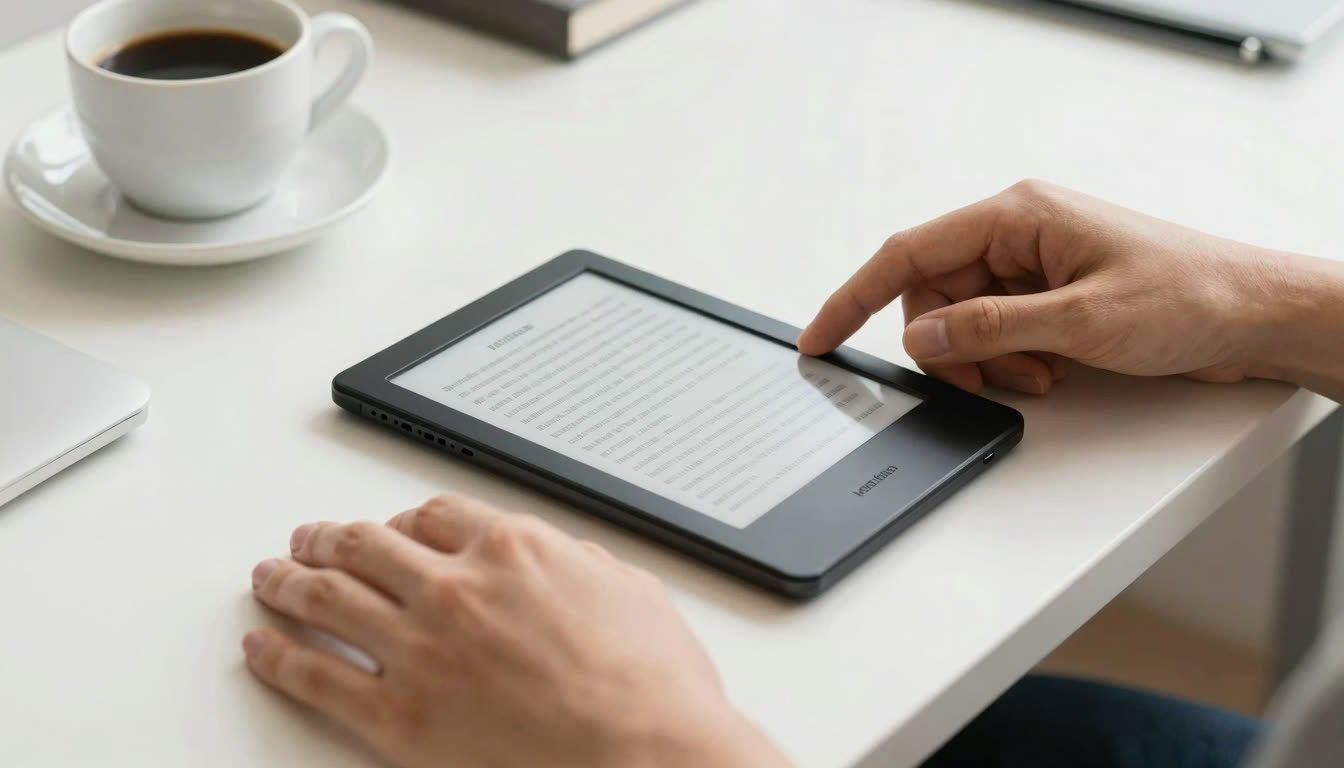
For background on how dedicated reading hardware has evolved, see Wikipedia's entry on e-readers.
Timeline: Indie publishers Q1 2027, major publishers Q3-Q4 2027.
Prediction #6: Bionic Reading Will Split Into "Fast" and "Deep" Modes
The prediction: Bionic reading apps will evolve beyond one-size-fits-all, offering "fast mode" for skimming and "deep mode" for comprehension-focused reading.
Why it's happening: Not all reading is created equal. Skimming a news article needs different formatting than studying a dense academic paper. Advanced bionic reading tools will adjust bolding intensity, line spacing, and fixation point density based on your goal.
FastRead already offers Focus Reader for distraction-free deep reading and Practice Texts for speed training. Expect more granular controls: "skim mode" with aggressive bolding for 500+ WPM, "study mode" with gentler formatting and vocabulary highlighting, "language learning mode" with enhanced fixation points for non-native text.
Timeline: Basic modes available now, advanced customization by Q3 2027.
Wild Card Prediction: Bionic Reading Will Go Audio
The unexpected one: By 2027, we'll see "bionic audio", text-to-speech that emphasizes the same syllables that bionic text bolds, creating an audio equivalent of visual fixation points.
This sounds weird, but the principle is the same: guide attention to key parts of words so your brain processes meaning faster. Imagine audiobooks with subtle emphasis patterns that let you absorb content at 2x speed without the chipmunk effect.
Speechify and similar text-to-speech apps are the obvious candidates to experiment here. The first company to nail bionic audio will unlock a massive market of commuters and multitaskers who want speed reading benefits without screens.
Timeline: First experiments Q3 2027, viable products 2028.
How to Prepare for the Bionic Reading Revolution
Start training now. Your reading speed is like a muscle, it improves with practice. Use FastRead's Bionic Reader to convert articles, PDFs, and ebooks into bionic format. Measure your baseline with the Speed Test, then practice daily with the Practice Texts tool.
Build the habit. Start with articles and shorter documents, then work up to full books. Most people see noticeable improvements within a week of consistent bionic reading.
Go multimodal. Pair bionic reading with AI tools strategically. Use FastRead's Text Summarizer to get the gist of a document, then read the full bionic version of sections that matter. Use the Vocabulary Builder to strengthen comprehension while you speed up.
Track your progress. The Reading Tracker helps you measure WPM improvements over time. Seeing your speed increase from 200 WPM to 350 WPM is incredibly motivating.
Advocate for accessibility. If you're a student, ask professors to provide bionic-formatted course materials. If you're a professional, suggest your company adopt bionic reading tools for document-heavy work. The more people request it, the faster it becomes standard.
The Bottom Line
AI summarizers are brilliant for certain tasks, like generating study guides, creating quick overviews, and extracting key points. But for actually reading and understanding documents? Bionic reading is faster, more accurate, and gives you the full picture.
By 2027, we'll look back at 2026 as the year everyone realized that reading faster is better than not reading at all. The tools are already here. FastRead is completely free on iOS, Android, and web, with 11 professional reading tools including bionic conversion, speed testing, focus reading, and progress tracking.
The question isn't whether bionic reading will replace AI summarizers for long documents. It's whether you'll be ahead of the curve or playing catch-up in 2027.
Ready to see what you've been missing? Try the Bionic Reader now and test your reading speed. It takes 30 seconds, and you might just discover your new superpower.
About the author
Daniel Cho
Reading Tech Analyst
Daniel Cho covers reading technology for FastRead - how bionic reading, RSVP and speed-reading tools actually work, and how they compare. He tests reading apps and browser tools hands-on and writes the deep-dives that cut through the hype.
More from Daniel Cho →Read faster everywhere with the app
Bionic-read any article, PDF or ebook on the go, save your library, and track your speed. Free to download.


 Scan to get the app - opens the App Store on iPhone/iPad, Google Play on Android