5 Myths About Bionic Reading Apps That Are Costing You Hours Every Week

Sophie Bennett
Reading Science Writer
There are a lot of misconceptions floating around about bionic reading apps, and honestly, some of them are costing you serious time. Maybe you've heard that bionic reading is just a gimmick, or that speed reading destroys comprehension, or that you need to shell out big money for a decent reading app. These myths keep people stuck reading at the same pace they learned in elementary school, spending hours on textbooks and reports when they could be done in half the time.
Let's clear the air. As someone who has tested every speed reading method and bionic reading app out there, I'm here to debunk the most common myths that are keeping you from unlocking your full reading potential. Whether you're a student drowning in research papers, a professional buried in reports, or just someone who wants to read more books, understanding the truth about bionic reading apps can literally give you hours back every week.
What's in this article
- Myth #1: Bionic reading is just a marketing gimmick
- Myth #2: Speed reading sacrifices comprehension
- Myth #3: You need an expensive subscription
- Myth #4: Bionic reading only works for easy reading
- Myth #5: You can't use it with your ebooks and PDFs
- Myth #6: Learning to speed read takes months
- Myth #7: Speed reading apps are for people who dislike reading
- The bottom line: what you're actually missing
Myth #1: Bionic Reading Is Just a Marketing Gimmick With No Science Behind It
People believe this because bionic reading is relatively new to mainstream awareness, and the bolded-text format looks almost too simple to work. "How can just bolding half a word make me read faster?" is a fair question.
The truth: Bionic reading is grounded in well-established principles of visual perception and cognitive processing. The technique creates artificial fixation points, the spots where your eyes naturally pause while reading. Here's what actually happens: when you read normally, your eyes make rapid jumps called saccades between fixation points. Your brain then processes the visual information at each stop.
By bolding the first portion of each word, bionic reading aims to optimize these fixation points. Your peripheral vision catches the bolded part, and your brain's pattern recognition fills in the rest automatically. This isn't magic, it's working with how your visual cortex already operates. Research on reading patterns shows that skilled readers don't actually look at every letter; they recognize word shapes and patterns. You can read more about the method's origins and the trademarked technique behind it on the Bionic Reading entry on Wikipedia.
Recent developments in 2026 have validated this approach further. Educational tools like Jiffy Reader are now being implemented in K-6 classrooms specifically for boosting reading speed and comprehension, as reported by edu.com. Teachers are seeing measurable improvements in both metrics, which wouldn't happen if this were just smoke and mirrors.
If you're skeptical, try our Speed Test to measure your words per minute before and after reading bionic text. Most people see a 20-50% improvement immediately, with even bigger gains after a few practice sessions.
Myth #2: Speed Reading Apps Sacrifice Comprehension for Speed
This myth persists because some speed reading methods (particularly RSVP techniques that flash one word at a time) actually do reduce comprehension. People tried Spritz or Spreeder, felt like they were missing details, and concluded all speed reading destroys understanding.
The truth: Not all speed reading methods are created equal. RSVP (Rapid Serial Visual Presentation) methods that force you to read at a fixed pace can indeed hurt comprehension because they don't let you naturally slow down for complex passages or speed up for easy ones.
Bionic reading is fundamentally different. You're still reading normally, moving your eyes across lines of text at your own pace. The bionic format simply reduces the cognitive load of each fixation, letting you move faster without skipping information. You maintain full control and can slow down whenever you need to.
Multiple studies on reading efficiency show that reducing unnecessary eye movements (which bionic reading does) doesn't harm comprehension, it actually improves it by reducing cognitive fatigue. When your brain isn't working as hard to decode individual words, it has more resources for understanding meaning and making connections. For a plain-language look at how people actually scan and read text, the Nielsen Norman Group's research on how people read online is a useful reference.
This is why bionic reading has become particularly popular as a reading app for ADHD and dyslexia support. The fixation points help with tracking and focus without compromising understanding. In fact, many users with ADHD report better comprehension with bionic text because they can maintain focus more easily.
Want to test this yourself? Try our Focus Reader with a challenging article. Read half in normal text and half in bionic format, then compare what you remember. Most people are surprised to find they retain more from the bionic version.
Myth #3: You Need an Expensive Subscription for a Good Bionic Reading App
This myth exists because the official Bionic Reading app (the company that trademarked the term) has a limited free tier and charges $4.99-5.99/month for full features. People assume all bionic reading apps follow the same model.
The truth: FastRead is a completely free bionic reading app available on iOS, Android, and web, with no subscription required, no paywalls, and no catch. You get full access to all 11 professional tools including the Bionic Reader, PDF and ebook support, speed testing, focus mode, practice texts, and more.
Here's the reality: the technology behind bionic reading isn't complicated or expensive to implement. It's primarily a text formatting algorithm. Some companies charge for it because they can, not because they need to. We built FastRead specifically because we saw people being priced out of tools that could genuinely help them read more efficiently.
You can download FastRead from the App Store for iPhone and iPad, or from Google Play for Android devices. The web version at fastread.app gives you instant access to all tools without even downloading anything. Upload your PDFs, paste articles, or open ebooks, all in bionic format, all free.
This matters especially for students and researchers who need to process massive volumes of text but often have limited budgets. Why pay $60-70 annually for basic text formatting when you can get it free?
Myth #4: Bionic Reading Only Works for Easy, Casual Reading
People think this because they've maybe tried bionic reading with blog posts or news articles and assume it won't hold up with dense academic texts, technical documentation, or complex literature.
The truth: Bionic reading actually shines brightest with difficult, dense material. When you're reading challenging content, such as research papers, legal documents, technical manuals, or philosophy texts, your cognitive load is already high. You're processing complex concepts, unfamiliar terminology, and intricate arguments.
This is exactly when bionic reading provides the most value. By reducing the visual processing effort required to decode each word, your brain has more resources available for the hard part: understanding the actual content. It's like having a more efficient engine, where you get better performance when you're climbing hills, not cruising on flat roads.
Students using FastRead for textbooks and research papers consistently report that bionic format helps them push through dense chapters that would normally require multiple breaks. Professionals reading contracts and reports find they can maintain focus longer without the mental fatigue that normally sets in.
The key is that bionic reading doesn't speed you up by making you skip or skim, it speeds you up by making the mechanical process of reading more efficient. You still engage deeply with the content; you just spend less energy on eye movements and word recognition.
Try converting a challenging PDF or research paper with our Bionic Reader. You'll likely find that the sections you'd normally have to re-read become clearer on the first pass.
Myth #5: You Can't Use Bionic Reading With Your Existing Ebooks and PDFs
This misconception comes from people who've only seen bionic reading in dedicated apps with limited content libraries. They assume you need specially formatted files or can only read texts that come pre-loaded.
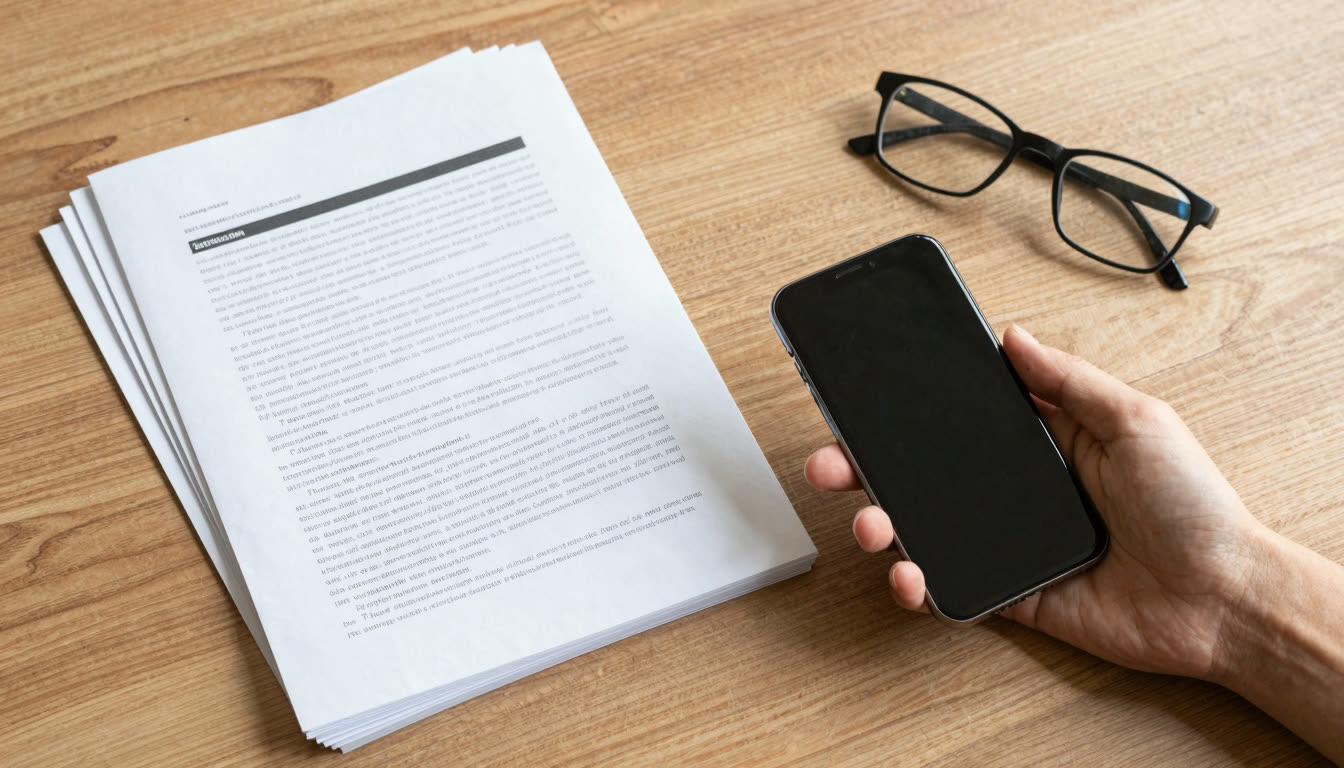
The truth: FastRead converts ANY text into bionic reading format instantly. Got a PDF textbook? Upload it. Have an ePub ebook? Open it. Want to read a long article or document? Paste it in. The conversion happens in real-time, and you're reading in bionic format within seconds.
This is actually one of the biggest practical advantages of a free bionic reading app like FastRead over paid alternatives. You're not locked into a specific ecosystem or content library. Your existing study materials, work documents, personal ebooks, and research papers all work seamlessly.
The iOS and Android apps support PDF and ePub formats directly, while the web version at fastread.app/tools lets you paste any text or upload documents. This means your entire digital library becomes readable in bionic format immediately, with no conversion tools, no reformatting, and no hassle.
For students especially, this is game-changing. Those expensive textbook PDFs you bought? Read them faster. Research papers for your literature review? Process them more efficiently. Study guides and notes? Convert them to bionic format and absorb them quicker.
Myth #6: Learning to Speed Read Takes Months of Training and Practice
This myth persists because traditional speed reading courses (like Iris Reading and others) are multi-week programs that require significant time investment and practice. People assume all speed reading improvement requires this level of commitment.
The truth: With bionic reading, you see immediate results, literally on your first try. There's no complex technique to learn, no eye movement exercises to practice, no months of training required. You simply read text that's been formatted to work better with how your brain already processes visual information.
Most people see a 20-30% speed increase the very first time they try bionic text. With just a few reading sessions over a week or two, that often improves to 40-50% or more as your brain optimizes for the new format. This isn't because you're learning a new skill, it's because you're removing friction from your existing reading process.
Yes, you'll get better with practice. Using our Practice Texts regularly helps your brain adapt faster to the bionic format. But unlike traditional speed reading methods that require you to fundamentally change how you read, bionic reading works with your natural reading patterns from day one.
This makes it ideal for people who need results now, whether that's students with exams coming up, professionals facing report deadlines, or anyone who simply doesn't have months to invest in reading courses. Download FastRead from the App Store or Google Play, open a document, and you're already reading faster. That's it.
Myth #7: Speed Reading Apps Are Just for People Who Don't Like Reading
The final myth is that speed reading tools are for people who want to "get through" books and documents as quickly as possible because they find reading tedious or unpleasant.
The truth: The most enthusiastic users of bionic reading apps are often the people who love reading most. Book lovers, researchers, students who genuinely enjoy learning, these are the people who benefit most because they want to read MORE, not less.
Think about it: if you love reading but only have time for one book a month, wouldn't you want to read two or three instead? If you're fascinated by your field of research but can only get through ten papers a week, wouldn't twenty be better? Speed reading isn't about loving reading less, it's about being able to do more of what you love.
Recent trends in 2026 show this clearly. As AI innovations create more information to process and stay current with (as noted in April 2026 tech reports), avid readers and knowledge workers are actually seeking tools to help them consume more content, not avoid it. The best free reading apps are being adopted by the most voracious readers, not the most reluctant ones.
Bionic reading apps like FastRead are fundamentally productivity tools for people who value reading and want to be more efficient with their time. Whether you're a student trying to read all your assigned materials, a professional staying current in your field, or a book lover with a massive TBR pile, reading faster means reading more.
The Bottom Line: What You're Actually Missing
These myths about bionic reading apps aren't just wrong, they're actively costing you time. If you're spending 10 hours a week reading for school or work, and you could cut that to 6-7 hours with the same or better comprehension, that's 3-4 hours back in your life every single week. Over a semester or a year, that's hundreds of hours.
Here is a quick recap of each myth, the reality behind it, and roughly how much time it can quietly cost a heavy reader who keeps believing it:
| Myth | The reality | Time it can cost you |
|---|---|---|
| It's just a gimmick | Grounded in how saccades and fixations work | Skipping a tool that could save 3-4 hrs/week |
| It hurts comprehension | Lower cognitive load can aid understanding | Re-reading dense passages you'd grasp first time |
| You need a paid subscription | Free apps like FastRead exist | $60-70/year on text formatting you can get free |
| It only suits easy reading | It helps most with difficult material | Slow, fatiguing slogs through technical text |
| It won't work with your files | Any PDF, ePub, or pasted text converts instantly | Hours hunting for "compatible" content |
| It takes months to learn | Most see gains on the first try | Weeks lost to courses you never needed |
| It's for people who dislike reading | Avid readers benefit most | Fewer books and papers finished each year |
The truth is simpler than the myths: bionic reading is a technique built on well-studied reading principles, it works immediately, costs nothing (with the right app), works with any content you already have, and helps most with difficult material. It's not a gimmick, it doesn't hurt comprehension, and it doesn't require months of training. If you want the deeper, research-led version of this argument, our companion piece on 5 bionic reading app myths debunked digs into the studies, and you can put any of these claims to the test with our Speed Test.
Ready to stop believing the myths and start reading faster? Try our Bionic Reader right now, paste in an article or upload a PDF and see the difference for yourself. Or download FastRead from the App Store or Google Play to transform all your ebooks and documents into bionic format. It's free, it works immediately, and you'll wonder why you didn't try it sooner.
Your future self, the one with hours of extra time and a much shorter reading list, will thank you.
About the author
Sophie Bennett
Reading Science Writer
Sophie Bennett translates reading science - eye-tracking studies, fixation research and comprehension data - into plain-English guidance. She grounds FastRead's articles in what the research actually shows.
More from Sophie Bennett →Read faster everywhere with the app
Bionic-read any article, PDF or ebook on the go, save your library, and track your speed. Free to download.


 Scan to get the app - opens the App Store on iPhone/iPad, Google Play on Android