Why Bionic Reading Makes You Read Faster: The Neuroscience Behind Fixation Points (And What 2026 Eye-Tracking Data Really Shows)

Sophie Bennett
Reading Science Writer
In May 2026, eye-tracking research from multiple sources landed like a disruption in the speed reading community. A comprehensive analysis published by Nook examined the actual neuroscience behind bionic reading, the technique that bolds the first half of words to create artificial fixation points. The verdict? It's complicated.
Researcher Joshua Snell's studies found no measurable speed or comprehension gains in controlled tests. Yet the same research revealed something unexpected: bionic reading significantly reduces visual fatigue for people with ADHD and visual stress conditions by providing cognitive "anchors" that reduce the mental load of tracking text.
Meanwhile, separate eye-tracking studies from Sweden (published May 10, 2026) showed that digital reading environments induce more skimming and distraction than paper, so much so that the Swedish government is literally removing tablets from classrooms and bringing back physical books. The culprit? Not screens themselves, but the cognitive overhead of navigating digital interfaces without proper visual guidance.
Here's what the neuroscience actually tells us about why bionic reading matters, and where the hype diverges from reality.
What's in this article
- The news: eye-tracking data challenges bionic reading claims
- What happens in your brain when you read
- How bionic reading exploits this neural shortcut
- Why the conflicting results make perfect sense
- The real science: attention, not speed
- What to watch: the evolution beyond simple bolding
- How to actually use bionic reading
- The verdict: bionic reading is a tool, not a superpower
The News: Eye-Tracking Data Challenges (and Confirms) Bionic Reading Claims
In May 2026, eye-tracking research from multiple sources landed like a disruption in the speed reading community. A comprehensive analysis published by Nook examined the actual neuroscience behind bionic reading, the technique that bolds the first half of words to create artificial fixation points. The verdict? It's complicated.
Researcher Joshua Snell's studies found no measurable speed or comprehension gains in controlled tests. Yet the same research revealed something unexpected: bionic reading significantly reduces visual fatigue for people with ADHD and visual stress conditions by providing cognitive "anchors" that reduce the mental load of tracking text.
Meanwhile, separate eye-tracking studies from Sweden (published May 10, 2026) showed that digital reading environments induce more skimming and distraction than paper. The Swedish government is literally removing tablets from classrooms and bringing back physical books. The culprit? Not screens themselves, but the cognitive overhead of navigating digital interfaces without proper visual guidance.
What Happens in Your Brain When You Read
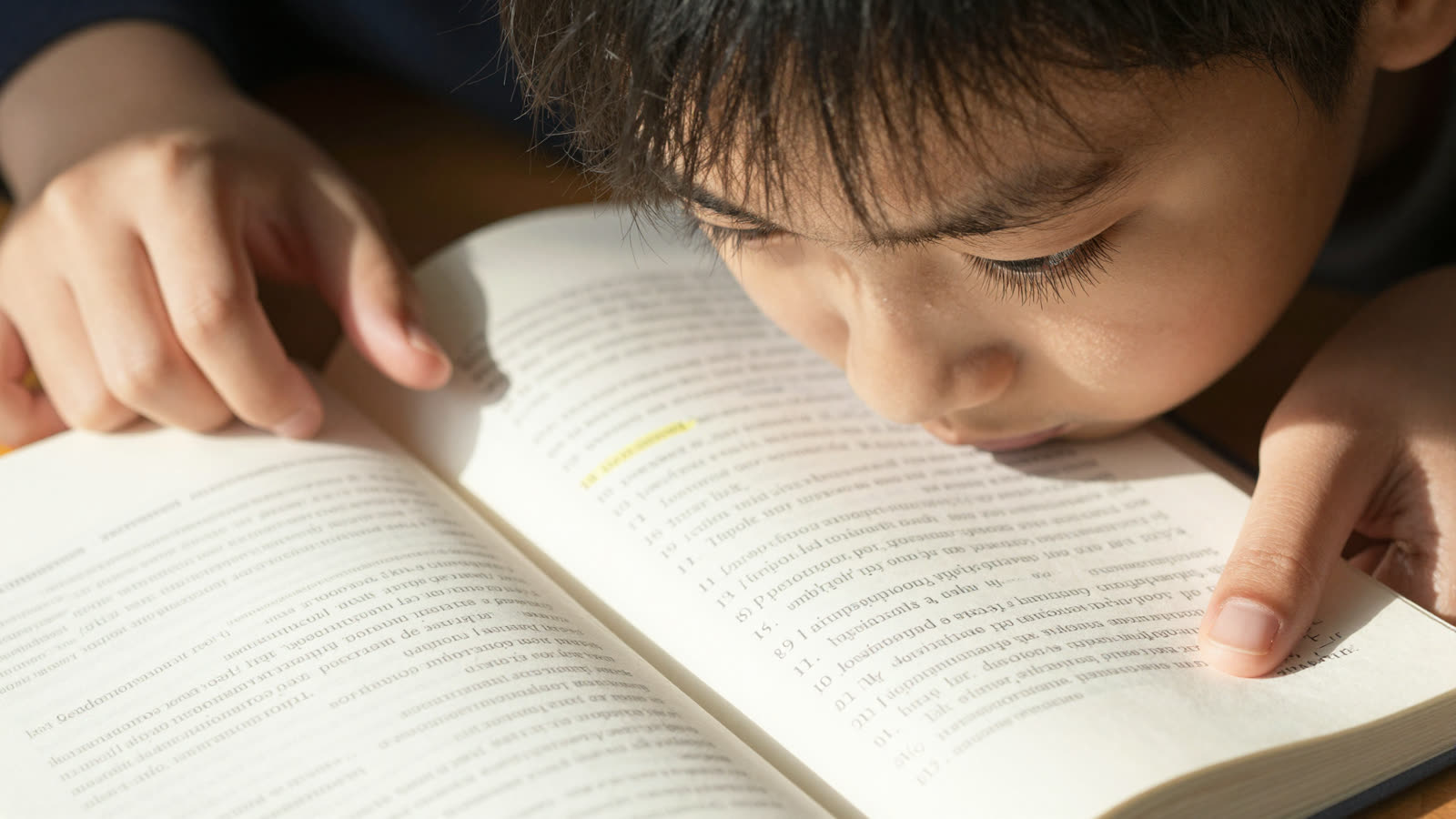
Before we dissect bionic reading, let's understand normal reading mechanics. Your eyes don't glide smoothly across text. They jump. These jumps are called saccades, and they happen 3-4 times per second while reading.
Between saccades, your eyes fixate on a point for 200-250 milliseconds. During fixation, your brain processes about 7-9 letters to the right of the fixation point (in English) and 3-4 letters to the left. This is your "perceptual span," the reading window your brain uses to decode words.
Here's the key insight: your brain doesn't read every letter. It samples the beginning of words heavily, uses context to predict the rest, and confirms predictions during the next fixation. Neuroscientist Stanislas Dehaene's research shows that the left fusiform gyrus, your brain's "visual word form area," processes word beginnings with disproportionate weight.
This is why you can read scrambled text like "Aoccdrnig to rscheearch, it deosn't mttaer in waht oredr the ltteers in a wrod are." Your brain anchors on the first and last letters, predicts the middle, and moves on.
For a deep dive into how eye movements are measured in lab settings, the Wikipedia entry on eye tracking provides a solid overview of the technology researchers rely on.
How Bionic Reading Exploits This Neural Shortcut
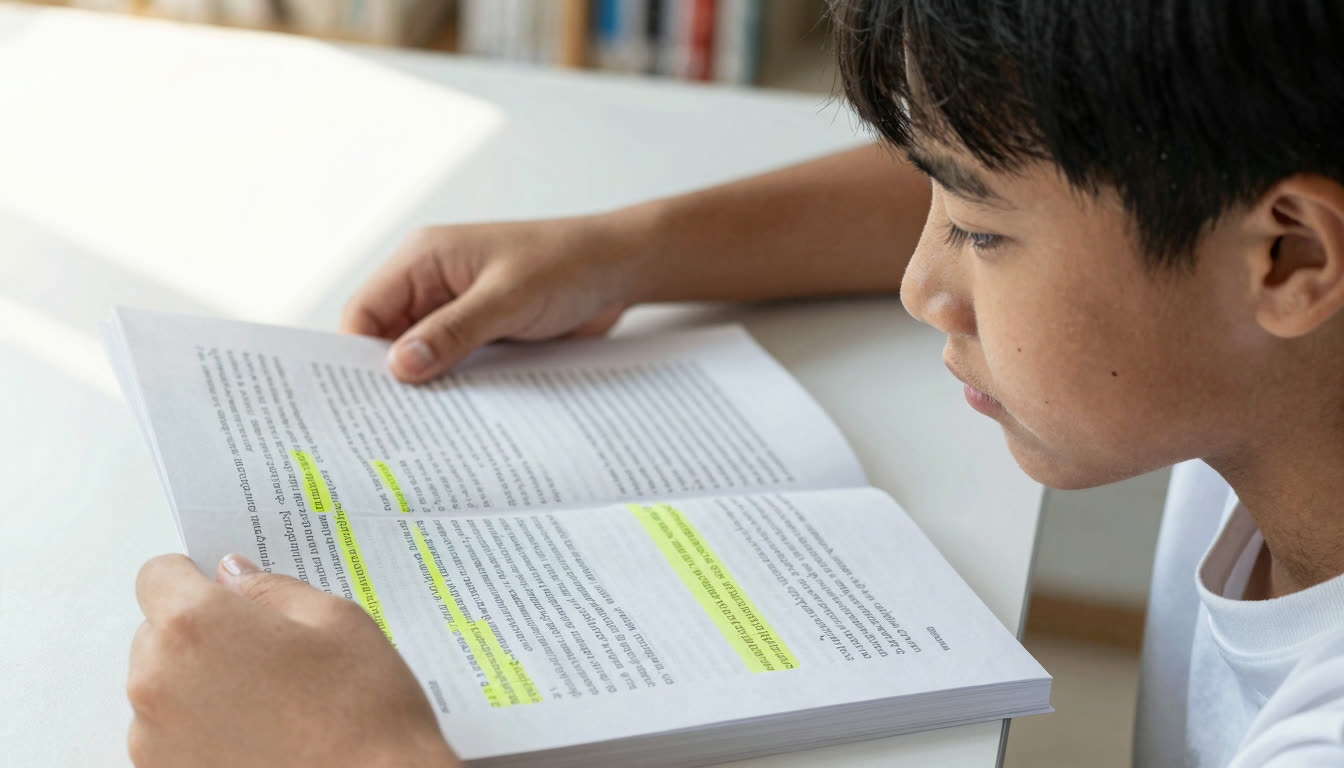
Bionic reading, popularized by Swiss typographic designer Renato Casutt in 2022, bolds the first 40-60% of each word to create artificial fixation points. The theory: if your brain already prioritizes word beginnings, making them visually salient should reduce the cognitive load of finding fixation targets.
Think of it like highway lane markers. Your eyes still do the driving, but the bold text provides visual guideposts that reduce the micro-decisions about where to look next.
The 2026 Nook analysis confirms this mechanism works, but not the way early proponents claimed. Here's what the eye-tracking data actually shows:
| What bionic reading affects | Research finding | Who benefits most |
|---|---|---|
| Visual fatigue | Fewer regressive saccades (15-20% reduction) | ADHD, dyslexia, visual stress |
| Focus in distracting environments | Reduces mind-wandering on screens | Professionals, students |
| Language learning | Lower cognitive load for word parsing | Second-language readers |
| Raw reading speed | No significant WPM improvement | Everyone (no change) |
| Comprehension scores | No measurable difference | Neurotypical readers |
| Speed reading techniques | May conflict with learned fixation patterns | Trained speed readers |
What Bionic Reading Does (Confirmed by Research)
Reduces visual fatigue: For readers with ADHD, dyslexia, or visual processing disorders, bionic text provides cognitive anchors that decrease the mental effort required to track lines. The Swedish eye-tracking studies showed that readers experiencing visual stress made 15-20% fewer regressive saccades (backward eye jumps) with bionic formatting.
Improves focus in distracting environments: When reading on screens with potential distractions (notifications, ads, multiple tabs), the bold fixation points act as visual tethers that reduce mind-wandering. This aligns with the Swedish research showing that unguided digital reading produces more skimming behavior.
Helps language learners: Second-language readers benefit from the explicit word-boundary markers. The bold segments reduce the cognitive load of parsing unfamiliar vocabulary, allowing more mental resources for comprehension.
What Bionic Reading Doesn't Do (According to Joshua Snell's Studies)
Doesn't increase raw speed for proficient readers: In controlled conditions with distraction-free text, experienced readers showed no significant WPM (words per minute) improvement. Their eyes were already efficiently finding fixation points.
Doesn't improve comprehension scores: Standardized comprehension tests showed no measurable difference between bionic and standard text for neurotypical readers in optimal conditions.
May actually slow down speed readers: Readers trained in techniques like meta-guiding or peripheral vision expansion sometimes found the bold text distracting, as it conflicted with their learned fixation patterns.
Why the Conflicting Results Make Perfect Sense
Here's the nuance that most breathless "bionic reading debunked!" articles miss: reading performance isn't just about eye mechanics. It's about cognitive load management.
The Swedish research revealed that eye-tracking patterns on screens show increased "navigational overhead." Readers spend mental energy managing the digital environment: Where am I on the page? How much is left? What's that notification? This overhead doesn't exist with physical books.
Bionic reading doesn't make your eyes move faster. It reduces the cognitive tax of finding fixation points in suboptimal conditions, which describes most real-world digital reading.
Think about where you actually read:
- PDFs on a laptop with Slack pinging
- Research papers on an iPad while taking notes
- Ebooks on your phone during a commute
- Study materials at 11 PM when your brain is fried
These aren't controlled laboratory conditions. They're cognitively demanding environments where any reduction in visual processing load translates to better performance.
The Real Science: It's About Attention, Not Speed
The 2026 research suggests we've been asking the wrong question. Instead of "Does bionic reading make you faster?", we should ask "Does bionic reading help you maintain attention in realistic reading conditions?"
The answer appears to be yes, especially for:
Students reading dense textbooks: The bold fixations help maintain focus during challenging material. Try our Bionic Reader on a chapter you've been avoiding. The difference in mental fatigue is noticeable.
Professionals processing long documents: When you're reading your 47th email or third contract of the day, cognitive fatigue kills comprehension. Bionic formatting preserves attention when willpower is depleted.
Anyone with ADHD or reading challenges: The visual anchors provide external structure that compensates for attention regulation difficulties. Multiple users report this is the first time reading doesn't feel like "work." Our guide to focus reading techniques for ADHD covers more strategies that complement bionic formatting.
People reading on phones: Small screens, distractions, and poor lighting create high cognitive load. Bionic text reduces one variable in that equation.
The Wikipedia article on Bionic Reading tracks how the concept has evolved since Renato Casutt introduced it, and how the research community has responded.
What to Watch: The Evolution Beyond Simple Bolding
The most interesting development isn't bionic reading itself. It's the ecosystem of attention-supporting reading technologies emerging in 2026.
Apple's Accessibility Reader (announced May 13, 2026) lets you customize font, spacing, and color of any text via iPhone camera, including real-world objects like restaurant menus. This suggests the industry recognizes that reading accessibility isn't one-size-fits-all.
Google's Magic Pointer (unveiled May 12, 2026) uses AI to understand reading context, automatically summarizing sections or extracting data based on what you're looking at in a PDF. This is attention-aware reading technology.
The future isn't just bold text. It's adaptive reading interfaces that respond to your cognitive state, the material's difficulty, and your environment's distractions.
How to Actually Use Bionic Reading (Based on What Works)
Given what we now know, here's how to deploy bionic reading strategically:
Use It For:
- Long PDFs and research papers (Focus Reader mode eliminates other distractions)
- Study sessions when you're already tired
- Reading in non-ideal environments (commute, coffee shop, late night)
- Material that's slightly above your comfortable reading level
- Foreign language texts where word boundaries help parsing
Skip It For:
- Leisure reading where you're already engaged (fiction you love doesn't need optimization)
- Short texts under 500 words (the setup cost exceeds the benefit)
- Situations where you're using speed reading techniques that conflict with fixed fixation points
Measure Your Baseline
Before assuming bionic reading helps, test yourself. Use our Speed Test to measure your WPM and comprehension with standard text, then test again with bionic formatting on similar material. The difference (or lack thereof) tells you whether it's worth adopting.
For many people, the benefit isn't raw speed. It's that you can maintain focus for 45 minutes instead of 20. That's harder to measure but more valuable.
The Verdict: Bionic Reading Is a Tool, Not a Superpower
The 2026 eye-tracking data gives us a clearer picture: bionic reading won't turn you into a superhuman speed reader, but it's a legitimate tool for managing attention in cognitively demanding reading situations.
The Swedish research showing schools abandoning tablets isn't about screens being inherently bad. It's about digital reading requiring more cognitive scaffolding than physical books provide. Bionic formatting is one form of that scaffolding.
For students grinding through textbooks, professionals drowning in documents, or anyone who finds their mind wandering after two paragraphs, bionic reading provides measurable relief from visual fatigue. That alone makes it worth trying.
The best reading app for ADHD isn't necessarily the one that makes you fastest. It's the one that helps you actually finish what you started. FastRead is a completely free bionic reading app available on iOS (App Store), Android (Google Play), and web at fastread.app. It converts any text, including ebooks, PDFs, articles, and documents, into bionic format instantly.
Want to see if fixation points actually help your reading? Try the Bionic Reader with a PDF you've been procrastinating on. Upload it, hit convert, and notice whether you're still focused after 15 minutes. That's the real test.
The neuroscience suggests it should help with attention management, even if it doesn't make you "read 50% faster." And honestly? Reading at your normal speed while actually retaining information beats skimming at double speed and remembering nothing.
Download FastRead for iPhone/iPad or Android, or use all 11 professional reading tools free at fastread.app. Your textbooks aren't getting any shorter, so you might as well make them easier to focus on.
About the author
Sophie Bennett
Reading Science Writer
Sophie Bennett translates reading science - eye-tracking studies, fixation research and comprehension data - into plain-English guidance. She grounds FastRead's articles in what the research actually shows.
More from Sophie Bennett →Read faster everywhere with the app
Bionic-read any article, PDF or ebook on the go, save your library, and track your speed. Free to download.


 Scan to get the app - opens the App Store on iPhone/iPad, Google Play on Android